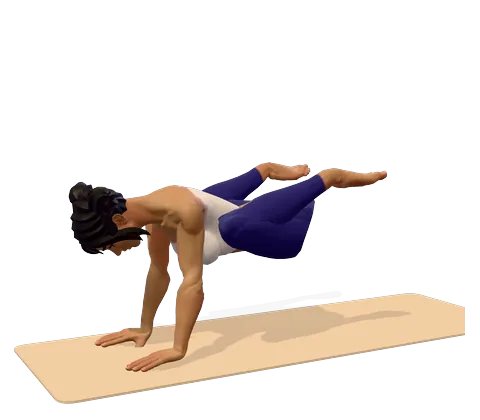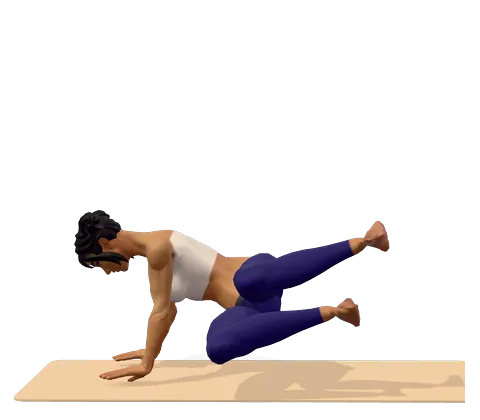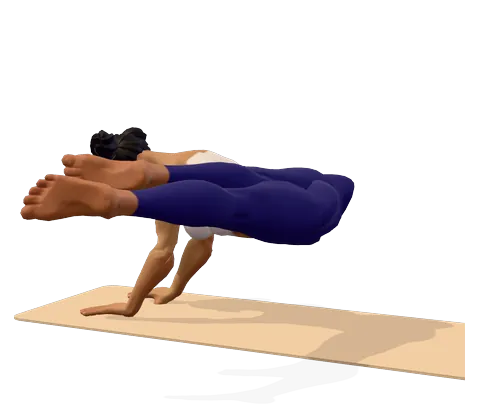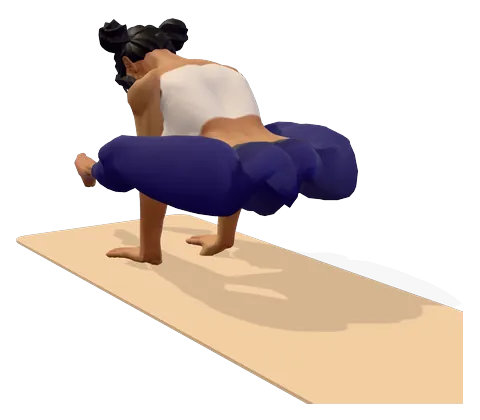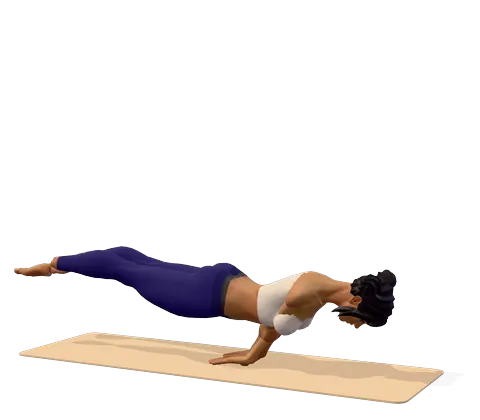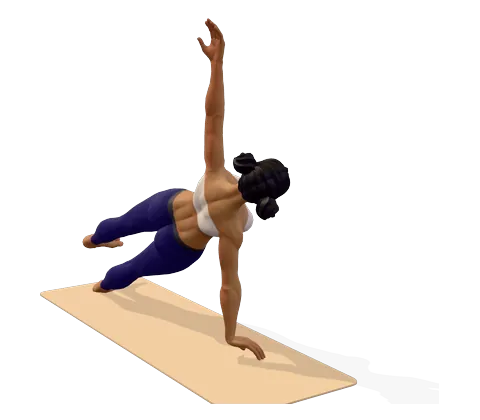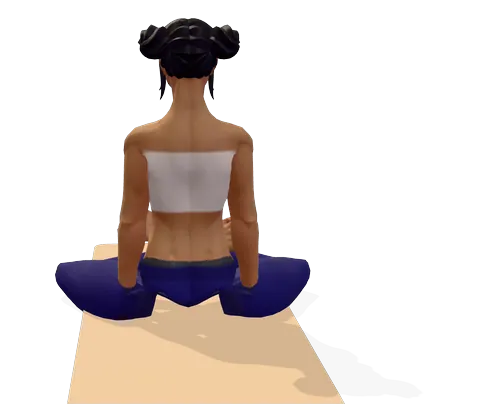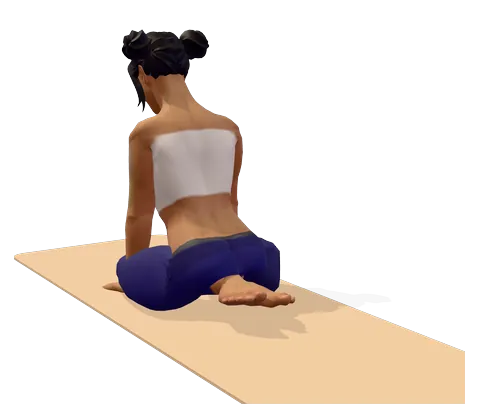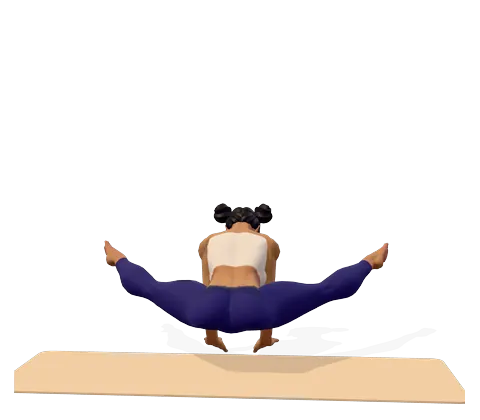
How to do Firefly Pose step by step
- Warm up your hamstrings, hips, wrists and core. Stand with your feet a little narrower than your shoulders and fold forward with your knees bent.
- Bring one shoulder behind the knee on the same side, then the other, so the backs of your thighs rest high on the backs of your upper arms.
- Place your palms flat on the mat just behind your heels, shoulder-width apart, fingers pointing forward and spread wide.
- Bend your elbows slightly back and lower your hips toward the height of your arms, as if sitting on a shelf.
- Squeeze your inner thighs onto your arms, shift your weight back into your hands and lift one foot, then both feet.
- Straighten your legs out to the sides, press through your heels, lift your chest and look forward. Stay for about 10 seconds (1–3 breaths).
- To come out, bend your knees, lower your feet to the floor and sit down gently. Rest in Child’s Pose and circle your wrists.
Where you feel Firefly Pose: what it stretches and strengthens
Squeeze your thighs onto your arms and straighten your legs out. In the 3D guide, turn on Body guide: areas that stretch glow green and areas that work glow saffron.
Stretches
- Hamstrings
- Inner thighs
Strengthens
- Arms
- Wrists
- Abs
Benefits and precautions
Benefits
- Builds strength in the arms, wrists and shoulders
- Works the core and hip flexors to hold the legs straight and lifted
- Stretches the hamstrings and inner thighs
- Improves balance, coordination and control on the hands
- Trains focus, because the pose needs full attention to hold
Avoid or modify if
- Wrist, elbow or shoulder injury, or carpal tunnel syndrome — avoid this pose
- Hamstring tear or strong sciatic pain — avoid the deep hamstring stretch
- Lower back pain or a disc problem — avoid; the rounded, loaded spine can aggravate it
- Pregnancy — avoid because of pressure on the belly and the risk of falling
- High blood pressure, heart disease or glaucoma — avoid strong arm balances and ask your doctor first
Firefly pose (Tittibhasana) is an advanced arm balance in which your hands press into the mat between your feet, the backs of your thighs rest high on your upper arms, and both legs stretch straight out to the sides, off the floor. It combines strength in the arms and core with open hamstrings and inner thighs, so it takes most people many months of steady practice. This page explains what the pose is, the prerequisites and prep poses, how to do firefly pose step by step, and who should avoid it.
What is firefly pose in yoga?
The firefly pose in Sanskrit is Tittibhasana. Tittibha is usually translated as "firefly" or "insect", though some Sanskrit dictionaries give it as a small bird, the lapwing, and asana means "pose". The name also appears spelled Titibhasana. Either way, the image is of something light, lifting off the ground on outstretched "wings", which is what your legs look like in the finished pose.
Firefly pose B and the firefly series
The lifted arm balance shown by the 3D figure is the version most people mean by firefly pose. In the Ashtanga intermediate series, Tittibhasana is taught as a short firefly series: in most Ashtanga teaching, A is this arm balance, while firefly pose B (Tittibhasana B) and C are done standing in a deep, wide forward fold with the hands bound behind the legs. Learn those lettered forms within that series, with a teacher.
Prerequisites: are you ready for Tittibhasana?
This is a level-4 pose. Before you try it, you should be able to:
- Hold Crow Pose steadily for 20–30 seconds.
- Fold forward with straight legs and your palms near the floor, as in Standing Forward Bend.
- Sit in Wide-Angle Seated Forward Bend with a long spine.
- Hold Boat Pose for 30 seconds.
- Bear weight on your hands without wrist pain.
If any of these are hard, stay with the prep work below. Forcing the legs straight before the hamstrings are ready strains the back of the knees and the lower back.
Firefly pose prep and progression
Good Tittibhasana prep combines hamstring flexibility, hip opening and arm strength. A simple firefly pose progression:
- Garland squat: sit in Garland Pose and work your shoulders inside your knees.
- Inner-thigh openers: the benefits of butterfly pose (Bound Angle) and wide-legged folds show up here, because open inner thighs let the legs spread wide.
- Shoulder-pressing pose: Bhujapidasana teaches the same arm shelf with the ankles crossed. It is the usual stepping stone.
- Firefly pose with blocks: sit back onto a block placed behind you, hands on two blocks beside your hips. Lift your feet and straighten your legs while the block takes some weight.
- Feet lifted, knees bent: in the full setup, lift the feet with the knees still bent, then straighten one leg at a time.
How to do firefly pose: tips that help
The steps above show the path the 3D figure follows. These firefly pose tips make the lift possible:
- Get the shoulders deep. The higher the thighs sit on the arms, the less work your arms have to do. Work each shoulder well behind its knee.
- Sit back, do not lean forward. Unlike crow, the weight shifts back into the heels of the hands.
- Squeeze in. Pressing the thighs into the arms and the arms back into the thighs creates the grip that holds you up.
- Straighten last. Lift the feet first, then extend the legs. Press out through the heels and spread the toes.
- Lift the chest. Straighten your arms as much as you can and look forward, not down.
Firefly pose benefits
The main Tittibhasana benefits are strength and control. Your arms, wrists and shoulders carry your whole body, and the core and hip flexors work hard to keep your legs straight and lifted. At the same time the hamstrings and inner thighs get a deep stretch. Like other arm balances, it trains balance and concentration, because you cannot hold it without attention.
| Stretched | Worked |
|---|---|
| Hamstrings | Arms: triceps, shoulders and chest |
| Inner thighs (adductors) | Wrists and forearms |
| Upper back, gently rounded | Abdominals, deep core and hip flexors |
Firefly pose yoga variations and transitions
- Tittibhasana vs Bhujapidasana: in shoulder-pressing pose the ankles cross in front and the legs stay bent; in firefly they straighten out wide. Bhujapidasana is easier.
- Tittibhasana vs Tolasana: both lift the whole body on the hands, but Scale Pose is done from a seated lotus or cross-legged position with the hands beside the hips.
- Firefly pose transitions: experienced students move from firefly into crow or jump back to Chaturanga. Learn these only after the basic pose is steady.
After firefly, balance the effort with gentle poses such as Child's Pose and Happy Baby; the benefits of Happy Baby Pose here are a soft release for the lower back and hips. Among firefly yoga poses and other arm balances, keep attempts short and stop while your form is still clean.
टिट्टिभासन (Tittibhasana in Hindi, firefly pose in Hindi): उकड़ूँ बैठें और दोनों कंधे घुटनों के पीछे ले जाएँ। हथेलियाँ एड़ियों के पीछे ज़मीन पर रखें और जाँघों को बाँहों पर टिकाएँ। वज़न हाथों पर लेकर पैर उठाएँ और दोनों टाँगें सीधी बगल में फैलाएँ। 1–3 साँस रुकें। यह बाँहें, कलाई और पेट की मांसपेशियाँ मज़बूत करता है और जाँघों के पीछे खिंचाव देता है। कलाई, कंधे या कमर में चोट हो, या गर्भावस्था में, यह आसन न करें।
Frequently asked questions
What is firefly pose in yoga?
Firefly pose (Tittibhasana) is an arm balance in which your hands are on the floor between your feet, your thighs rest on your upper arms and your straight legs lift out to the sides.
Is firefly yoga pose good for beginners?
No. It is an advanced pose. Beginners should build up with Garland Pose, Crow Pose, Bhujapidasana and hamstring stretches, and try the block version first.
How long should I hold firefly pose?
About 10 seconds, or 1–3 breaths. Come down while your legs are still straight and your arms still strong.
Why can’t I straighten my legs in firefly pose?
Usually the hamstrings are tight or the thighs are too low on the arms. Work your shoulders further behind your knees and keep stretching your hamstrings with forward bends.
What are the contraindications for Tittibhasana?
Avoid it with wrist, elbow or shoulder injuries, carpal tunnel syndrome, hamstring tears, lower back or disc problems, high blood pressure, heart disease, glaucoma and during pregnancy.
Is firefly harder than crow pose?
For most people, yes. Firefly needs the same arm strength plus open hamstrings and inner thighs, so it is usually learned after crow and Bhujapidasana.
This page is for general education. Check with your doctor before starting yoga if you are pregnant, have a medical condition or an injury. Stop if you feel pain, dizziness or shortness of breath.