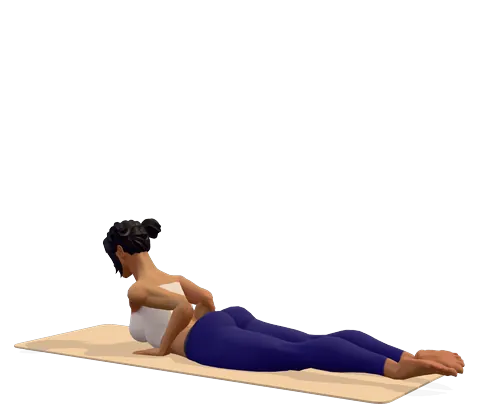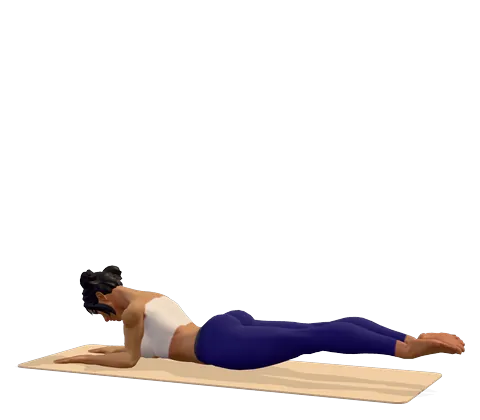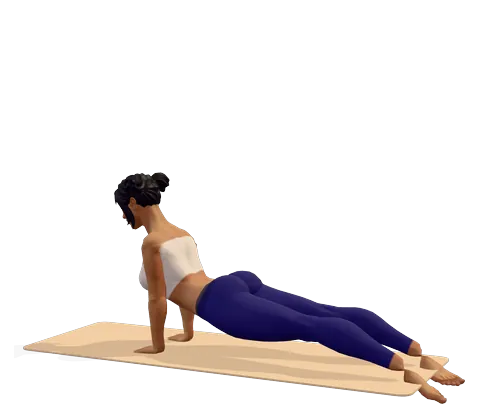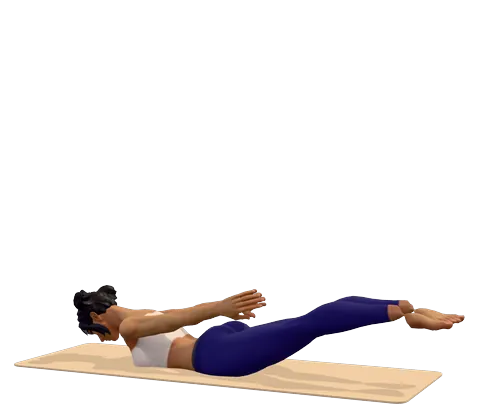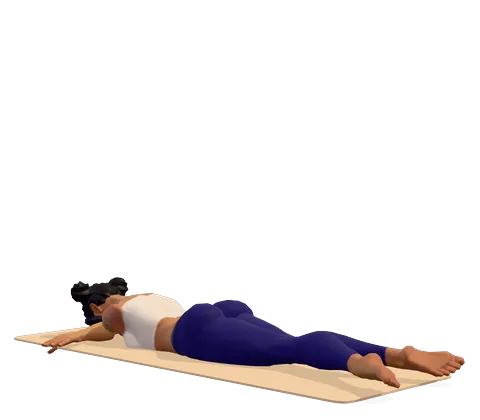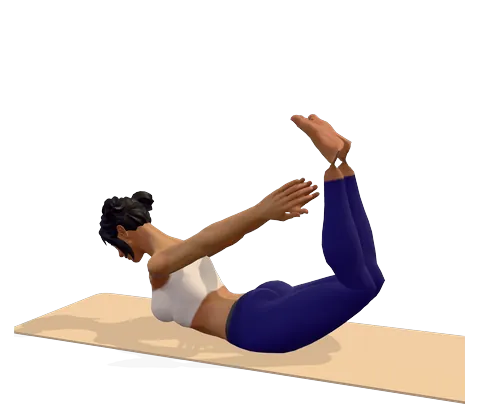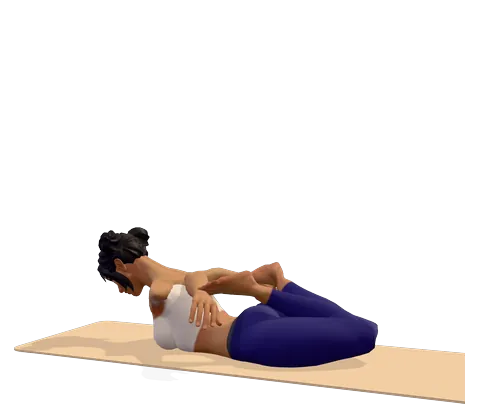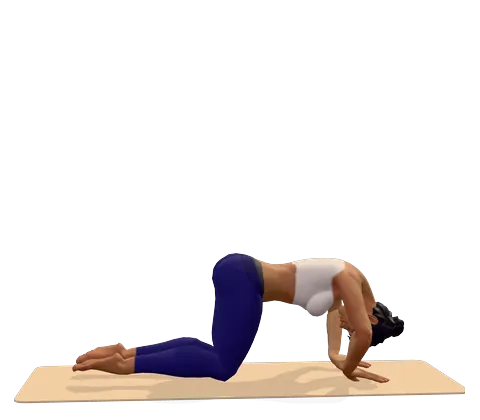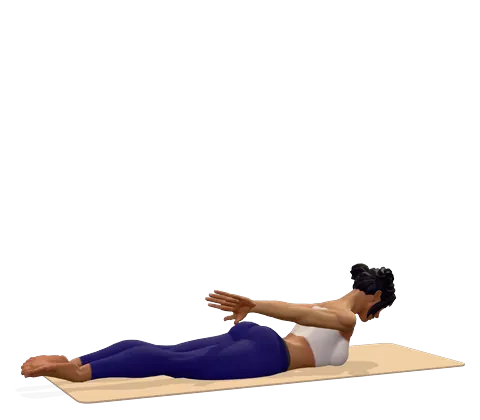
How to do Snake Pose step by step
- Lie on your front with your legs together and the tops of your feet on the mat. Rest your chin or forehead on the floor.
- Reach your arms behind you, interlace your fingers and rest your clasped hands on your lower back or buttocks.
- Press the tops of your feet and your pubic bone gently into the mat. Lengthen your legs back.
- Breathe in and lift your head, chest and shoulders off the floor, drawing your clasped hands back toward your feet. Only the back muscles lift you.
- Keep your legs and feet on the mat, your neck long and your gaze forward. Squeeze your shoulder blades gently together.
- Hold for 2–4 breaths (10–15 seconds). If you can, lift the clasped hands a little away from your back.
- Breathe out, lower your chest and head, release your hands and rest with your arms by your sides. Repeat 2–3 times.
Where you feel Snake Pose: what it stretches and strengthens
Clasp your hands behind you and lift your chest by pulling your arms back. In the 3D guide, turn on Body guide: areas that stretch glow green and areas that work glow saffron.
Stretches
- Chest
- Shoulders
Strengthens
- Upper back
- Lower back
- Glutes
Benefits and precautions
Benefits
- Strengthens the upper and lower back and the glutes without using the arms
- Opens the chest and stretches the front of the shoulders
- Counters rounded shoulders from desk work, driving and phone use
- Builds the back strength that makes cobra, locust and bow easier
- A playful, low-risk backbend for kids
Avoid or modify if
- Pregnancy after the first trimester — do not lie on your belly
- Recent abdominal surgery, hernia or a peptic ulcer
- Acute back pain, spondylolisthesis or a disc injury that worsens in backbends — ask your physiotherapist
- Shoulder injury — keep the hands resting on the lower back or hold a strap instead of clasping
- Stop if you feel pinching in the lower back, neck strain or pain down a leg
Snake pose (Sarpasana) is a backbend done lying on your front with your hands clasped behind your back. Because the hands cannot push, the muscles of your back do all the lifting, while the clasped arms draw the shoulders back and open the chest. It looks simple and it is, but it is one of the best ways to build real back strength for other backbends. This page explains what the snake pose is, how to do it, its benefits, a kids version and who should take care.
What is the snake pose in yoga?
In yoga, the Sanskrit name is Sarpasana: sarpa means snake and asana means pose. The snake pose yoga name fits the shape: the legs lie long like a snake's tail and the head and chest lift as if the snake were raising itself to look around. Sarpasana is taught in the Bihar (Satyananda) tradition as a variation of cobra. It is not the "snake" of Pilates, which is a twisting move on a machine, and it is not the snake poses of dance or martial arts.
Snake pose vs cobra pose
Both lift the chest from lying on your front. In cobra (Bhujangasana) the hands are under the shoulders and help you up; in Sarpasana the hands are clasped behind, so the lift is lower but the back works harder. Cobra gives a deeper arch; snake gives more strength and a stronger shoulder opening. What is cobra pose good for? Mostly back strength and an open chest, so the Bhujangasana pose benefits overlap with those of Sarpasana. Most people find their cobra improves after a few weeks of snake practice, which shows the importance of cobra pose's hidden ingredient: back strength, not arm push. In that sense, the benefits of cobra pose start here.
How to do snake pose yoga well
The steps above give you the full sequence. These details help beginners get it right:
- Clasp gently. Interlace the fingers loosely. If your shoulders are tight, hold a strap or a small towel between your hands.
- Lead with the chest, not the chin. Keep the back of the neck long and look at the floor a little ahead of you.
- Arms reach back, not up. Draw the clasped hands toward your heels. Lifting the arms high is an extra that only comes once the chest lift is steady.
- Legs stay down. Press the tops of the feet into the mat. If the legs lift too, you are doing locust.
The 3D guide shows the snake pose from any angle. Rotate it to see how the clasped hands rest on the buttocks and the chest lifts only a little.
Sarpasana benefits
The main snake pose yoga benefits come from working the back extensors in a position that stops you cheating with your arms. The same muscles hold you upright when you sit and stand, so a stronger back often means better posture and less fatigue from sitting. The clasped hands also stretch the chest and the front of the shoulders, which tend to tighten with desk work and phone use.
| Stretches | Strengthens |
|---|---|
| Chest (pectorals) | Upper back (trapezius, rhomboids) |
| Front of the shoulders | Lower back (erector spinae) |
| Abdomen (mildly) | Glutes and backs of the legs |
Press the Body guide button beside the 3D figure to see these areas light up. In short, the snake pose stretch is for the chest and shoulders, and the work is in the back.
Is snake pose good for back pain?
Which yoga asana helps relieve back pain? No single yoga asana for lower back pain suits everyone, but back-strengthening poses like this one are often part of yoga programmes for chronic low back pain. Sarpasana is a strengthening yoga pose for lower back pain that comes from weakness or stiffness, not for an acute flare-up. Start with small lifts and stop if pain sharpens. The yoga poses that relieve back pain best are usually a mix of gentle movement, strengthening and rest, so treat yoga poses for back pain relief as a routine rather than a single fix. As with the benefits of most yoga asana poses, regular practice counts more than one long hold. If you are looking for the best asanas for back pain relief, see our yoga for back pain page and the yoga for posture routine, and always keep any treatment your doctor has prescribed.
Snake pose for kids
In kids yoga, the snake pose is a favourite because children get to be the animal. Ask them to lie on their tummy, clasp their hands behind and lift their chest like a snake in a striking pose, making a long "sssss" sound on the breath out. As an exercise, the snake pose is gentle on the back and a good way to teach slow breathing. Keep holds short, 3–5 seconds, and let them rest between rounds. The Yoga for Kids session on our practice page has more playful poses like this one.
Snake pose yoga for beginners and variations
- Hands on the lower back: no clasp at all, the palms resting on the sacrum. The easiest version.
- Strap between the hands: for tight shoulders.
- Arms lifted: once the chest lift is steady, raise the clasped hands away from your back for a stronger shoulder opening.
- Superman variation: the benefits of the superman pose are similar, but the arms reach forward and the legs lift too, so it is much harder on the lower back.
Sarpasana is an easy asana to learn, and it combines well with others. Before it, warm up with crocodile pose and baby cobra. After it, you can try locust pose or, later, the stronger bow pose, whose benefits include a deep chest opening. Finish by resting on your back; if you are not sure how to do Shavasana, see corpse pose. The benefits of Savasana, the classic yoga pose for rest, include letting the back muscles relax after the work.
सर्पासन (Snake Pose) — हिंदी में: पेट के बल लेट जाएँ, दोनों हाथ पीछे ले जाकर उंगलियाँ आपस में फँसाएँ और हाथ कमर या नितंबों पर रखें। साँस लेते हुए सिर और छाती ऊपर उठाएँ और हाथों को पैरों की ओर खींचें, पैर ज़मीन पर ही रहें। 2–4 साँस रुकें और धीरे से नीचे आएँ। सर्पासन के फायदे: पीठ और कमर मज़बूत होती है, छाती और कंधे खुलते हैं और झुककर बैठने की आदत सुधरती है। गर्भावस्था, हर्निया या पेट के ऑपरेशन के बाद यह आसन न करें।
Frequently asked questions
What are the benefits of Sarpasana?
Sarpasana strengthens the upper and lower back and the glutes, opens the chest and shoulders and helps counter slouching. It also builds the back strength needed for cobra, locust and bow pose.
What is the difference between snake pose and cobra pose?
In cobra your hands are under your shoulders and help you lift. In snake pose your hands are clasped behind your back, so your back muscles do all the work and the shoulders open more.
How long should I hold snake pose?
Hold for 2–4 breaths (10–15 seconds) and repeat 2–3 times with rests in between.
Is Sarpasana good for lower back pain?
It may help if your back is weak or stiff, as part of a wider programme. Do not practise it during an acute flare-up, and stop if the pain sharpens or spreads down a leg.
Can kids do the snake pose?
Yes. Children enjoy hissing like a snake as they lift their chest. Keep the holds short and playful.
Who should avoid snake pose?
People who are pregnant (after the first trimester), who have had recent abdominal surgery, a hernia or a peptic ulcer, or who have an acute back or shoulder injury.
What is snake pose yoga in Hindi?
सर्पासन (Sarpasana). "Sarpa" means snake. It is a variation of the Bhujangasana yoga pose, in Hindi भुजंगासन, the cobra pose.
This page is for general education. Check with your doctor before starting yoga if you are pregnant, have a medical condition or an injury. Stop if you feel pain, dizziness or shortness of breath.