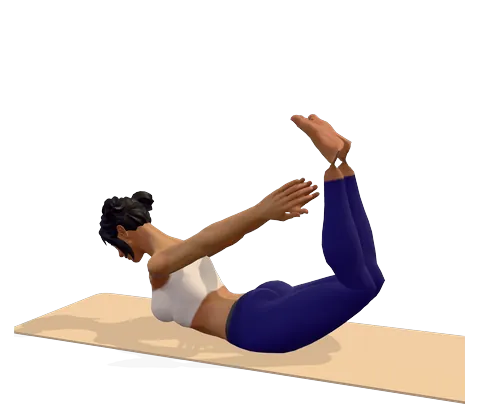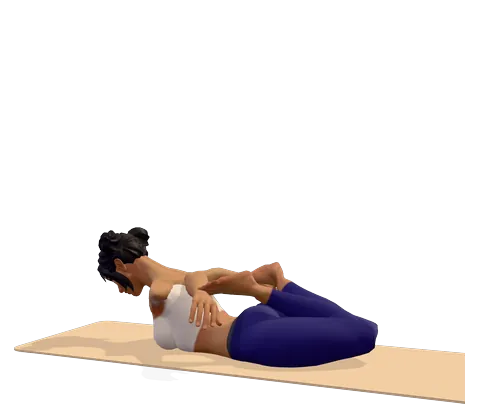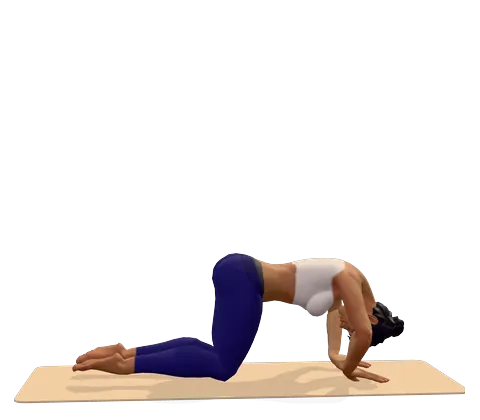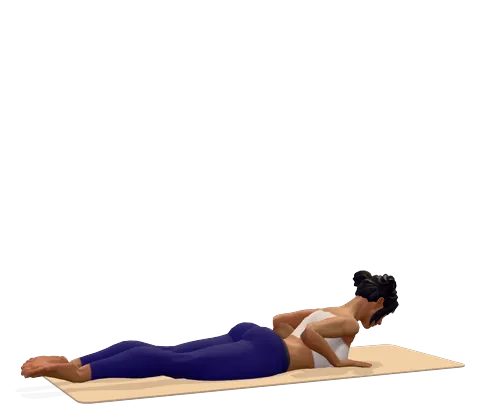
How to do Baby Cobra Pose step by step
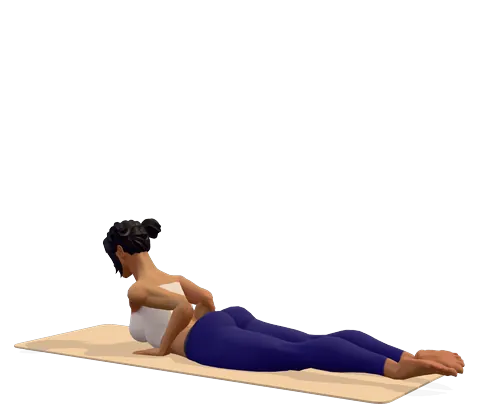
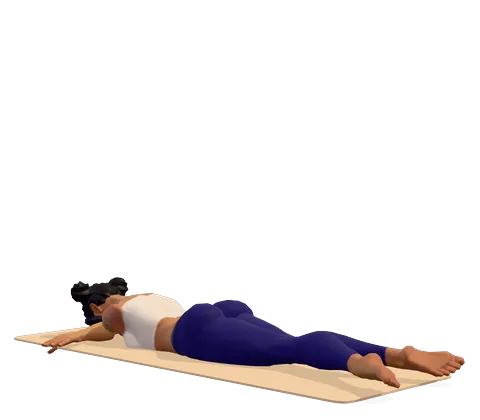
- Lie on your front with your legs straight and together or hip-width apart. Rest the tops of your feet on the mat and your forehead on the floor.
- Place your hands flat beside your chest, fingertips in line with your shoulders, and hug your elbows in toward your ribs.
- Press the tops of your feet and your pubic bone gently into the mat to steady the lower body.
- Breathe in and lift your forehead, chin and upper chest a few centimetres, using your back muscles. Your hands stay light — you could lift them off the floor.
- Keep your elbows bent and pointing back, your shoulders drawing away from your ears and your gaze on the floor a little ahead.
- Hold for 3–5 slow breaths (about 15–20 seconds).
- Breathe out and lower slowly to the mat. Turn your head to one side and rest before repeating 2–3 times.
Where you feel Baby Cobra Pose: what it stretches and strengthens
Lift just your chest with your back muscles, hands barely pressing. In the 3D guide, turn on Body guide: areas that stretch glow green and areas that work glow saffron.
Stretches
- Chest
- Abs
Strengthens
- Lower back
Benefits and precautions
Benefits
- Strengthens the muscles along the lower and middle back
- Opens the chest and the front of the shoulders gently
- A safe first backbend for beginners and people with a stiff back
- Counters slouching after long hours at a desk or on the phone
- Teaches you to lift with the back rather than push with the arms, the key to a good full cobra
Avoid or modify if
- Pregnancy after the first trimester — do not lie on your belly; try a standing cobra at the wall
- Recent abdominal surgery, hernia or a peptic ulcer
- Acute back injury or back pain that sharpens when you arch — ask your physiotherapist first
- Stop if you feel pinching in the lower back or pain spreading down a leg
Baby cobra pose (Ardha Bhujangasana) is the smallest, gentlest version of cobra in yoga: you lift your head and upper chest only a few centimetres off the floor, using the muscles of your back while your hands barely press. Because it is so low, it is the safest way to start backbends and the best way to learn the cobra move in yoga correctly. This guide explains what baby cobra is, how it differs from full cobra and sphinx, what it works and how to fit it into a short flow.
What is baby cobra pose?
The baby cobra yoga pose Sanskrit name is Ardha Bhujangasana. Ardha means half, bhujanga means snake or cobra and asana means pose, so it is literally the half cobra pose. What is a cobra pose in yoga? It is a backbend lying on your front, with the chest lifted like a cobra raising its hood. In baby cobra the lift is small and the hands are almost passive; in full cobra pose (Bhujangasana) the arms help you rise higher.
Put simply, cobra pose explained in one line: the lower body stays on the mat, the chest lifts, the neck stays long. Baby cobra keeps that shape small, so almost anyone can do it. Watch a baby doing tummy time and you will see the same move: a baby lifting its head and chest with its back muscles is doing a natural cobra pose, which makes the name easy to remember.
How to do baby cobra pose correctly
If you want to learn how to do the cobra pose correctly, start here. The steps above take you in and out; these points make the baby cobra posture work:
- Test the hands. At the top, try to hover your palms off the floor for a moment. If you can, your back muscles are doing the lifting. If you drop, you were pushing with the arms.
- Stay low. The lower ribs stay on the mat. Height is not the goal; a long, even curve is.
- Legs active, buttocks soft. Press the tops of the feet down and reach through the toes, but do not clench the buttocks hard.
- Long neck. Keep the chin slightly tucked and look at the floor a little ahead. Do not throw your head back.
The 3D guide shows the right baby cobra position from the side; rotate it to see how low the chest stays.
Baby cobra pose benefits
Half cobra pose benefits come from strengthening the back extensor muscles while gently opening the front of the body. After a day of sitting, the chest tends to close and the upper back rounds; a few rounds of baby cobra reverse that pattern. It is a common choice among asanas for back pain because it works the back without heavy loading. See our yoga for back pain and yoga for posture guides for whole sessions.
What does the cobra pose stretch?
| Stretches | Strengthens |
|---|---|
| Chest (pectorals) and front of the shoulders | Lower back (erector spinae) |
| Abdominal muscles | Muscles between the shoulder blades |
| Front of the hips (mildly) | Glutes and back of the legs (lightly) |
So, what is cobra pose good for? Mainly a stronger back and a more open chest. Press the Body guide button by the 3D figure to see these areas highlighted.
Baby cobra vs cobra pose, sphinx, seal and upward dog
| Pose | Arms | Height of the lift |
|---|---|---|
| Baby cobra | Hands beside the chest, almost no push | Low: upper chest only |
| Cobra | Hands under shoulders, elbows bent, arms help | Medium to high |
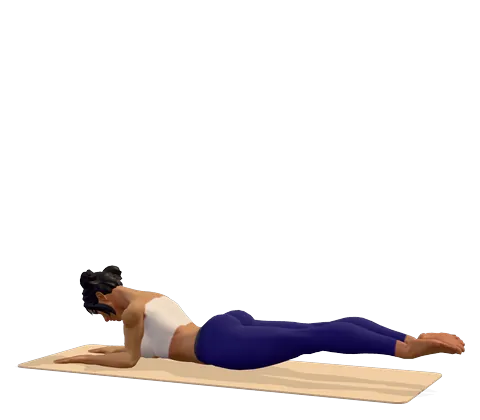
| Sphinx | Forearms on the floor, elbows under shoulders | Low, supported and passive |
| Seal (yin yoga) | Straight arms, hands wide and turned out | High, passive |
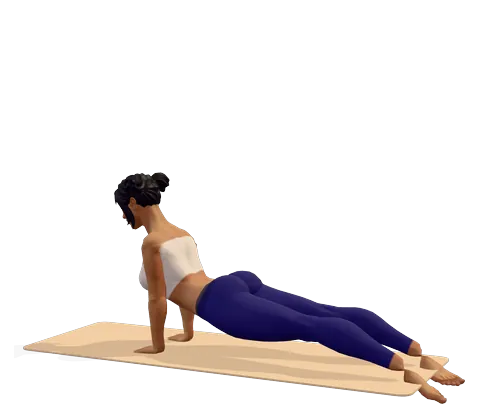
| Upward dog | Straight arms, thighs lifted off the floor | High, strong |
Baby cobra pose vs sphinx: both are low and gentle, but sphinx is held by the forearms and can be held longer, while baby cobra trains the back muscles to lift you. In the cobra vs seal pose comparison, seal is a deep, passive yin shape and is much stronger on the lower back. Cobra pose vs upward facing dog: in upward dog the arms are straight and the legs lift, so it needs far more strength.
Baby cobra pose for beginners and variations
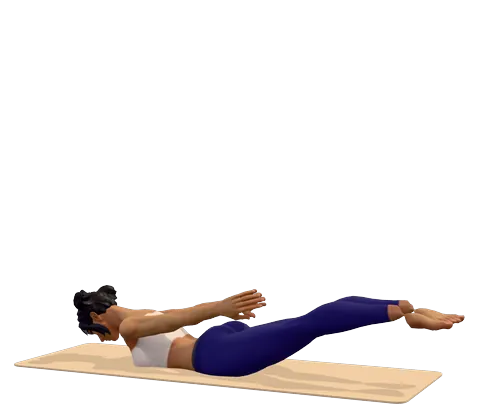
- Hands-free baby cobra: lift the chest with the hands hovering or the arms by your sides. It is the purest back-strength version.
- Dynamic lifts (half cobra push-up): lift on the breath in and lower on the breath out, 5–8 times. Many teachers use this as a cobra exercise for the back before holding.
- Chair yoga cobra pose: sit tall at the front edge of a chair, hands on the seat behind you, and lift the chest gently. Useful if lying down is hard; see chair yoga.
- Standing cobra at the wall: hands on the wall at chest height, lift the chest and draw the shoulders back.
In a yoga class, helpful baby cobra pose cues are "lift from the back, not the hands", "lower ribs down" and "long neck". The voice guide uses cues like these while the figure moves.
Child's pose to cobra: a simple flow
Moving between child's pose and cobra is one of the kindest back sequences you can do. From child's pose, slide forward onto your belly, lift into baby cobra on a breath in, then press back into child's pose on a breath out. Repeat this child's pose cobra flow 4–6 times. The child's pose to cobra stretch alternately rounds and arches the spine, and many people find child's pose for lower back pain comforting between the lifts. Baby cobra is also part of the Surya Namaskar sequence in many classes, and you can practise it with voice guidance in the guided sessions.
अर्ध भुजंगासन (Baby Cobra Pose) — हिंदी में: पेट के बल लेट जाएँ और हथेलियाँ छाती के पास रखें, कोहनियाँ शरीर से सटी रहें। साँस लेते हुए केवल पीठ की मांसपेशियों से सिर और छाती थोड़ा सा ऊपर उठाएँ, हाथों पर ज़ोर न डालें। 3–5 साँस रुकें और धीरे से नीचे आएँ। भुजंगासन के फायदे: कमर मज़बूत होती है, छाती खुलती है और बैठे रहने से होने वाली अकड़न कम होती है। गर्भावस्था, हर्निया या पेट के ऑपरेशन के बाद यह आसन न करें।
Frequently asked questions
What is the difference between baby cobra and cobra pose?
Baby cobra lifts only the upper chest a few centimetres, using the back muscles with the hands almost passive. Full cobra lifts higher with the arms helping. Baby cobra is the place to start.
What is Bhujangasana and its benefits?
Bhujangasana is cobra pose, a backbend lying on your front. The benefits of Bhujangasana in yoga practice: it strengthens the back, opens the chest and helps counter slouching. Ardha Bhujangasana is its gentle half version.
How to do Bhujangasana step by step as a beginner?
Lie on your front, hands beside your chest, press the feet down and lift only your head and upper chest on a breath in. Stay for a few breaths, lower down and repeat. Go higher only when that feels easy.
Is baby cobra good for lower back pain?
Gentle back extension like this is part of many back-care programmes, and it is usually easier on the back than a high cobra. Stop if pain sharpens or spreads down a leg, and ask a physiotherapist if you have a disc problem.
Is baby cobra the same as sphinx pose?
No. Sphinx rests on the forearms and is supported; baby cobra has the hands beside the chest and relies on the back muscles to lift.
How many times should I do baby cobra?
Do 3–5 short holds of 3–5 breaths, resting with your cheek on your hands in between.
What is the cobra pose in Hindi?
Cobra pose in Hindi is भुजंगासन (Bhujangasana), and baby cobra is अर्ध भुजंगासन, "half cobra pose". Bhujangasana benefits in Hindi: कमर मज़बूत होती है और छाती खुलती है।
This page is for general education. Check with your doctor before starting yoga if you are pregnant, have a medical condition or an injury. Stop if you feel pain, dizziness or shortness of breath.