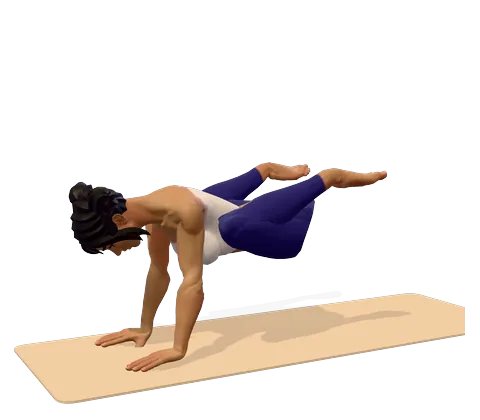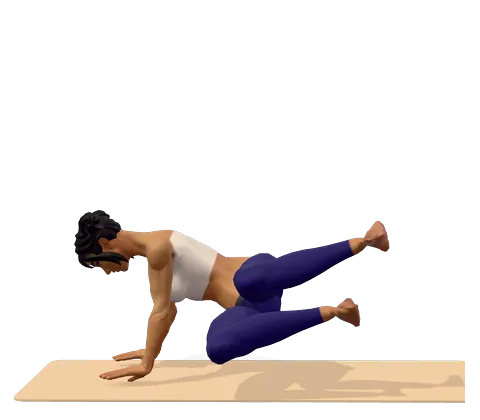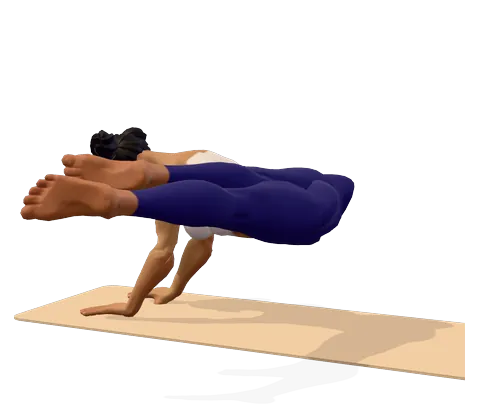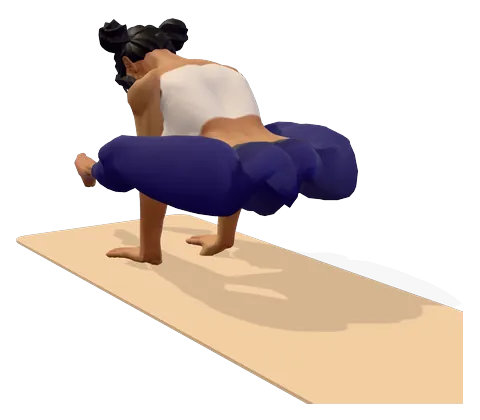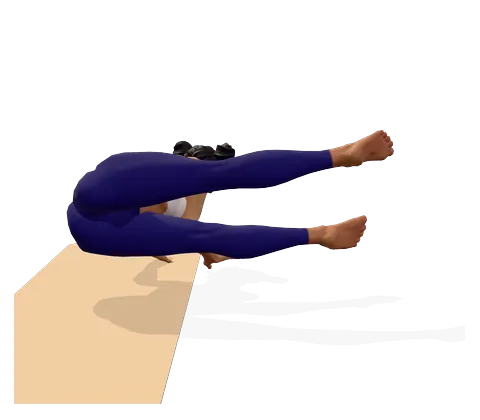
How to do Two-Legged Sage Koundinya Pose step by step
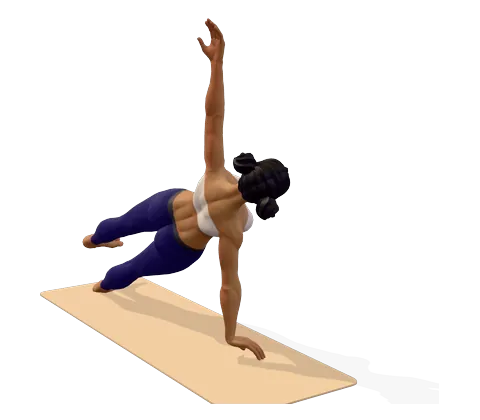
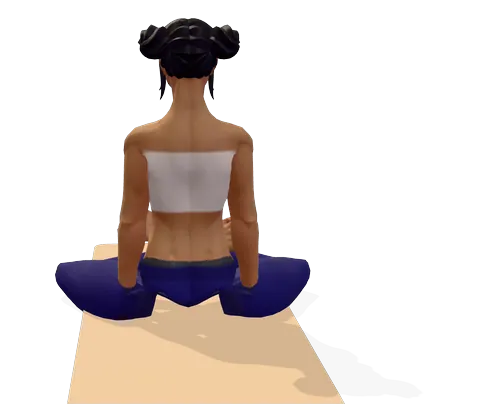
- Warm up your wrists, shoulders, core and spine with a few twists. Squat with your feet and knees together, palms together at your chest.
- Twist to the right and hook your left upper arm outside your right thigh, as far toward the hip as you can.
- Place both hands flat on the mat to the right of your feet, shoulder-width apart. Bend your elbows straight back to about 90 degrees so the outer right thigh rests on the shelf of your left upper arm.
- Lean forward, shift your weight into your hands and lift both feet into Side Crow (Parsva Bakasana), knees bent and stacked.
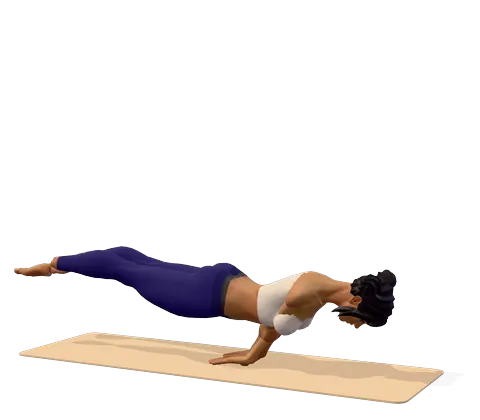
- Keeping your legs together, straighten both legs out to the right side. Press out through both heels and squeeze the legs together.
- Keep your chest forward, your shoulders at elbow height and your gaze ahead. Stay for about 10 seconds (1–3 breaths).
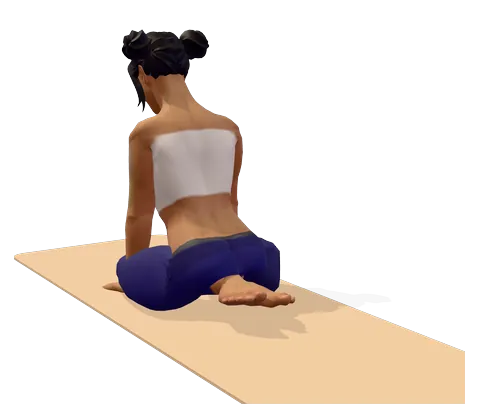
- Bend your knees back into Side Crow, lower your feet and rest in Child’s Pose. Repeat twisting to the left.
Where you feel Two-Legged Sage Koundinya Pose: what it stretches and strengthens
Stack both legs on one arm and straighten them to the side. In the 3D guide, turn on Body guide: areas that stretch glow green and areas that work glow saffron.
Stretches
- Side waist
Strengthens
- Arms
- Wrists
- Abs
Benefits and precautions
Benefits
- Builds strength in the arms, shoulders, chest and wrists
- Works the obliques and deep core that hold the twist
- Stretches the obliques and the side of the waist
- Strengthens the legs, which must stay straight and pressed together
- Trains balance, coordination and focus
Avoid or modify if
- Wrist, elbow or shoulder injury, or carpal tunnel syndrome — avoid this pose
- Lower back pain, a disc problem or sacroiliac (SI) joint pain — avoid the loaded twist
- Pregnancy — avoid; deep twists and belly compression are not suitable
- High blood pressure, heart disease or glaucoma — avoid strong arm balances and ask your doctor
- Recent abdominal surgery or a hernia — avoid the strong core effort
Dwi Pada Koundinyasana, the two-legged sage Koundinya pose, is an advanced twisting arm balance. You balance on bent arms with the outer thigh resting on the back of the opposite upper arm, then straighten both legs together out to the side. In simple terms, it is Side Crow with straight legs. It needs strong arms and core, a deep twist and good control, so it is usually learned after Side Crow is steady.
Dwi Pada Koundinyasana meaning
The Sanskrit name has four parts: dwi means "two", pada means "foot" or "leg", Koundinya (also spelled Kaundinya) is the name of a sage, and asana means "pose". So it is the two-legged pose of the sage Koundinya, the partner of Eka Pada Koundinyasana, in which only one leg reaches to the side and the other extends back.
Do not confuse it with Dwi Pada Viparita Dandasana. Both names begin with "dwi pada", but that pose is a deep backbend with the head and forearms on the floor, not an arm balance.
Prerequisites: are you ready?
This is a level-4 pose. Try it only when all of these are true:
- You can hold Side Crow for 15–20 seconds on each side with steady breathing.
- You can lower slowly through Chaturanga with your elbows close to your ribs.
- You can twist deeply in a squat and hook your arm well outside the opposite thigh.
- Your wrists, shoulders and lower back are free of pain and injury.
Place a cushion or folded blanket in front of your face. The chest leans far forward in this pose, and a fall forward is the most common mistake.
Dwi Pada Koundinyasana prep
- Twisted squat: practise the prayer twist in a squat, or Revolved Chair Pose, until the arm hooks easily outside the thigh.
- Side Crow on a block: stand on a block so lift-off is easier, and hold for a few breaths.
- Chaturanga holds: hold the low position with elbows at 90 degrees to build pressing strength.
- Core work: Boat Pose and side planks help the legs stay lifted.
Dwi Pada Koundinyasana for beginners: first attempts
Start from Side Crow and straighten only the top leg, keeping the lower knee bent. Then try straightening the lower leg while the top one stays bent. When each works alone, straighten both together. Keep each try short: two or three clean attempts per side are enough in one practice.
How to do Dwi Pada Koundinyasana: key points
The 3D guide twists to the right first, with both legs reaching to the right over the left arm. Along with the steps above:
- Hip high on the arm. The deeper your twist, the higher the thigh sits on the upper arm and the more stable you are.
- Elbows back, not out. Keep both elbows pointing behind you, stacked over the wrists, to build a firm shelf.
- Counterbalance. As your legs go out to the side, your chest must move forward. Let the head travel forward too.
- Legs as one. Squeeze the inner thighs and press through both heels. Separated legs are harder to hold.
- Chest level. Keep the shoulders at elbow height; do not let them drop below the elbows.
Dwi Pada Koundinyasana benefits
The main benefits are strength and balance. Your arms, chest, shoulders and wrists carry your whole body at a low angle, and the obliques and deep core work hard to hold the twist. The side of the waist gets a stretch as the torso turns. Keeping two straight legs lifted also works the legs and hips, and the pose demands complete focus.
| Stretched | Worked |
|---|---|
| Obliques and side of the waist | Arms: triceps, shoulders and chest |
| Outer hip of the top leg | Wrists and forearms |
| Abdominals, obliques and inner thighs |
Dwi Pada Koundinyasana vs similar poses
- vs Side Crow: Side Crow keeps both knees bent. Straightening the legs moves weight away from the hands, so Dwi Pada Koundinyasana needs more strength.
- vs Eka Pada Koundinyasana I: one leg reaches to the side and the other extends straight back, which spreads the weight more evenly.
- vs Eight-Angle Pose: both legs also go to one side, but the top leg hooks over the arm and the ankles cross, without a twist.
Unlike most one-legged yoga poses, which are standing balances, this pose keeps both legs together and off the floor.
Dwi Pada Koundinyasana contraindications
Avoid this pose with wrist, elbow or shoulder injuries, carpal tunnel syndrome, lower back or SI joint pain, a hernia, after recent abdominal surgery, with high blood pressure, heart disease or glaucoma, and during pregnancy. It is not one of the lower back pain yoga poses; for back pain choose gentle options from our yoga for back pain plan and ask a physiotherapist.
द्वि पाद कौंडिन्यासन (Dwi Pada Koundinyasana in Hindi): उकड़ूँ बैठकर दाईं ओर मुड़ें और बाईं बाँह दाईं जाँघ के बाहर रखें। हथेलियाँ ज़मीन पर रखें, कोहनियाँ पीछे मोड़ें और आगे झुककर पैर उठाएँ। दोनों पैर साथ रखते हुए दाईं ओर सीधे फैलाएँ, 1–3 साँस रुकें, फिर दूसरी ओर करें। इससे बाँहें, कंधे और पेट की मांसपेशियाँ मज़बूत होती हैं। कलाई, कंधे या कमर में चोट, हाई ब्लड प्रेशर या गर्भावस्था में यह आसन न करें।
Frequently asked questions
What is Dwi Pada Koundinyasana?
It is an advanced twisting arm balance. From Side Crow you straighten both legs together out to the side, balancing on bent arms with the outer thigh on the opposite upper arm.
How do I do Dwi Pada Koundinyasana step by step?
Squat, twist and hook your arm outside the opposite thigh, plant your hands, bend your elbows back, lift into Side Crow, then straighten both legs to the side and hold for 1–3 breaths.
What is the difference between Eka Pada and Dwi Pada Koundinyasana?
In Eka Pada Koundinyasana I, one leg reaches to the side and the other extends straight back. In Dwi Pada Koundinyasana, both legs extend together to the side.
How long should I hold Dwi Pada Koundinyasana?
About 10 seconds, or 1–3 breaths, on each side. Come down while your form is still steady.
What should I practise before this pose?
Side Crow, Chaturanga, the twisted prayer squat, Boat Pose and side planks.
Who should avoid Dwi Pada Koundinyasana?
Anyone with wrist, shoulder or lower back injuries, a hernia, high blood pressure, heart disease, glaucoma, recent abdominal surgery, or who is pregnant.
This page is for general education. Check with your doctor before starting yoga if you are pregnant, have a medical condition or an injury. Stop if you feel pain, dizziness or shortness of breath.