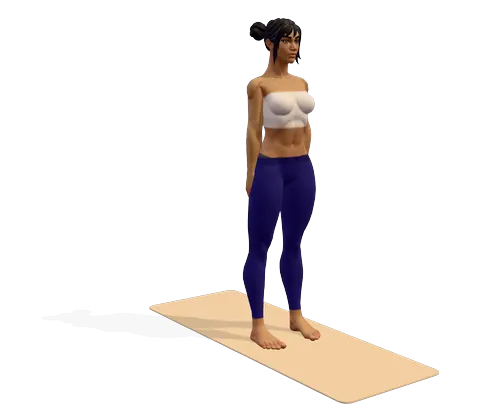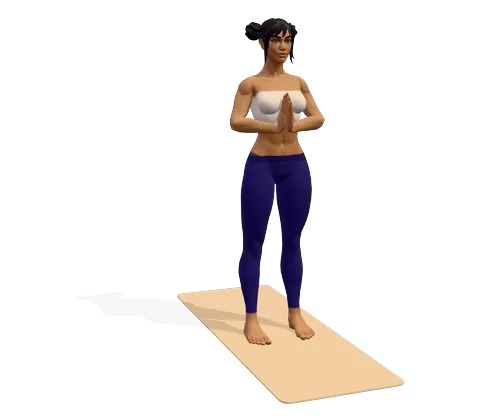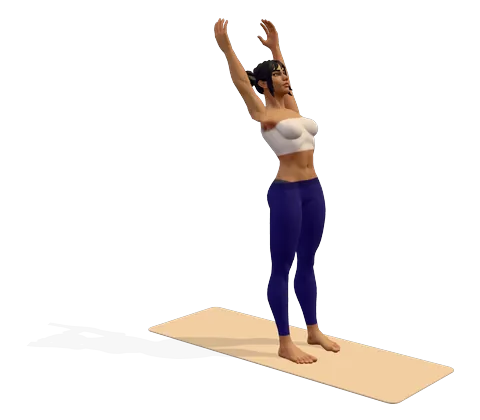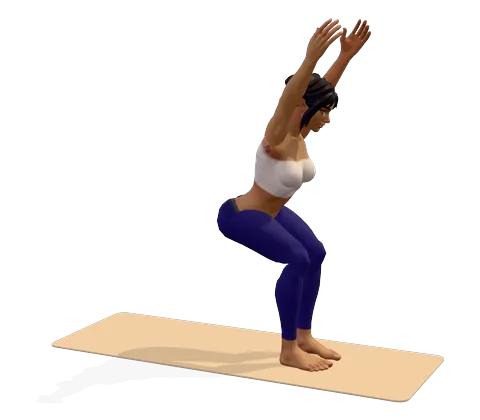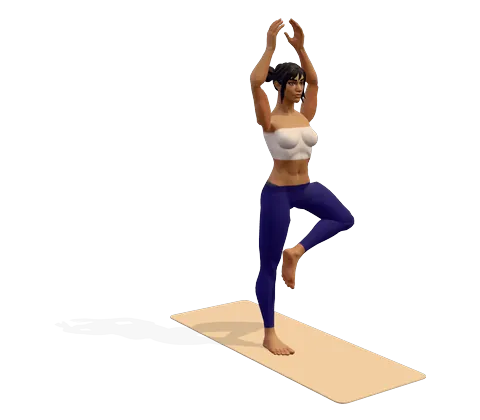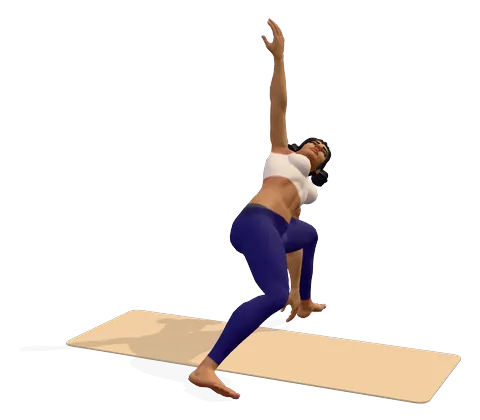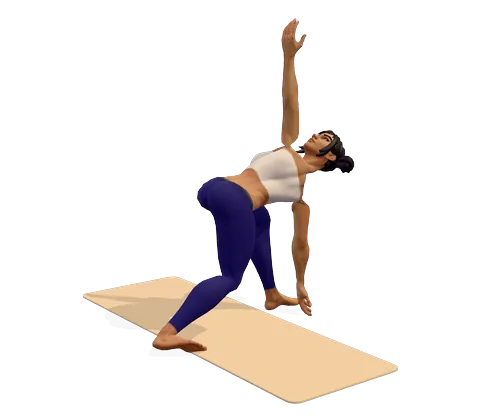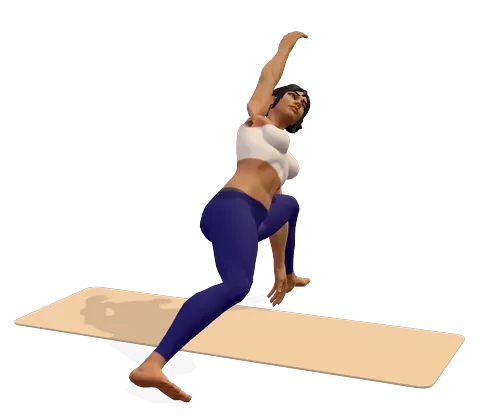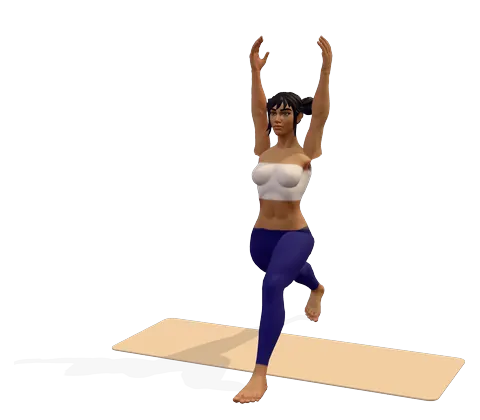
How to do High Crescent Lunge step by step
- From a standing forward fold or Downward Dog, step your left foot forward between your hands. Keep your right leg long behind you.
- Line up your left knee over your left ankle. Lift your right heel so you stand on the ball of the right foot, with the feet about hip-width apart side to side.
- Straighten your right leg and press the right heel back. Your hips point forward.
- Breathe in and lift your chest. Raise both arms overhead, shoulder-width apart, palms facing each other.
- Draw the lower belly in and let the tailbone drop toward the floor so the lower back stays long. Look straight ahead.
- Hold for 30 seconds (5–6 breaths), sinking the hips a little on each exhale and reaching up on each inhale.
- Breathing out, bring your hands down beside your front foot and step back. Repeat with the right foot forward.
Where you feel High Crescent Lunge: what it stretches and strengthens
Press your back heel away and lift up tall through your arms. In the 3D guide, turn on Body guide: areas that stretch glow green and areas that work glow saffron.
Stretches
- Hip flexors
- Calves
- Chest
Strengthens
- Front thighs
- Glutes
- Ankles
Benefits and precautions
Benefits
- Stretches the hip flexors and front of the thigh of the back leg
- Stretches the calf and sole of the back foot and opens the chest
- Strengthens the quadriceps, glutes and ankles of both legs
- Builds balance and core control in a narrow, upright stance
- Counters long hours of sitting, which shorten the front of the hips
- Warms the body and raises the heart rate in a flowing practice
Avoid or modify if
- Knee pain: keep the front knee over the ankle, never past the toes, and lower the back knee to the floor if needed
- High blood pressure or heart problems: keep the hands on the hips instead of overhead and breathe freely
- Shoulder injury: keep the arms lower, in a "cactus" shape or with hands on the hips
- Poor balance: widen the feet side to side or hold a wall or chair
- Lower back pain: do not arch; draw the belly in and keep the ribs over the hips
- Pregnancy: use a wider stance and a chair for support; ask your midwife or doctor first
High crescent lunge (Ashta Chandrasana) is one of the most common standing poses in modern yoga. You stand in a long lunge with the front knee bent, the back leg straight and the back heel lifted, and you reach both arms to the sky. It builds strong legs, stretches the front of the hips and asks for steady balance. Below are the crescent lunge alignment cues that matter most.
High crescent lunge Sanskrit name
The usual high crescent lunge Sanskrit name is Ashta Chandrasana. Chandra means "moon", and the arched line of the body is said to look like a crescent moon; asana means "pose". Ashta usually means "eight", and teachers disagree on why it is in the name, so treat it as a modern name. Some styles call this pose Alanasana, which is the other common high lunge in Sanskrit.
The names overlap. Crescent lunge with the back knee down is Anjaneyasana, which is why you will see "crescent lunge Anjaneyasana" and "high crescent lunge Ashta Chandrasana" used for two versions of one family. Crescent high lunge, high lunge pose and crescent lunge are all names for this upright, back-heel-lifted shape.
High crescent lunge cues: how to do a correct lunge
The steps above follow the 3D figure. These cues fix what usually goes wrong:
- Front knee over ankle. Look down: you should see your big toe beside the knee. If the knee goes past the toes, step the foot further forward.
- Feet on two tracks. Keep the feet hip-width apart side to side, not in one line.
- Back leg alive. Press the back heel away and lift the back thigh. A sagging back knee takes the stretch out of the hip flexors.
- Ribs over hips. Draw the lower belly in. Arching the lower back is the most common mistake and can pinch.
- Shoulders down. Reach up with the arms, not the shoulders.
Crescent lunge benefits
The main benefits of high crescent lunge are strength and length in one pose. The front leg works hard, especially the quadriceps and glutes, and the back leg stretches through the hip flexors, the front of the thigh and the calf. Reaching up opens the chest and the sides of the body. Because the stance is narrow and the back heel is lifted, the ankles and core work constantly to keep you steady.
What do lunges help with in daily life? Walking, climbing stairs, getting up from the floor and sports all rely on the single-leg strength this builds. For people who sit all day, the hip flexor stretch is a welcome counterweight; see our plan for desk workers.
High lunge anatomy: muscles used in crescent lunge
| Stretched | Worked |
|---|---|
| Hip flexors (iliopsoas) of the back leg | Quadriceps of the front leg |
| Calf and sole of the back foot | Glutes and hamstrings of the front leg |
| Chest and front of the shoulders | Ankles, feet and core for balance |
Turn on the Body guide in the 3D viewer to see these areas light up.
Crescent lunge vs high lunge, low lunge and Warrior 1
- Crescent lunge vs high lunge: in most classes they are the same pose. Some teachers use "high lunge" for the version with the hands on the hips or the front thigh.
- Crescent lunge vs low lunge: in low lunge the back knee rests on the floor, which is easier on balance and gives a deeper hip flexor stretch. This is the main low lunge vs high lunge yoga difference.
- High crescent lunge vs Warrior 1: in Warrior 1 the back heel is down and the back foot turns out about 45 degrees. Crescent lunge keeps the back heel lifted and both hips square, so it is easier on the back knee and ankle for many people but harder on balance.
How to do a lunge for beginners and seniors
Here is how to modify a lunge and make lunges easier without losing the benefits:
- Back knee down: lower the back knee onto a folded blanket for a low lunge.
- Hands on the hips or on blocks beside the front foot, instead of overhead.
- Shorter stance if the front knee or back hip feels strained.
- Chair support: hold a chair back with one hand. Beginner lunges for seniors are safest this way; see yoga for seniors.
If your knees are sensitive, keep the front shin vertical and use the yoga for knee pain plan for gentler options.
High crescent lunge variations and flow
- High crescent lunge prayer twist: palms together, hook the opposite elbow outside the front knee. This is Parivrtta Ashta Chandrasana, the revolved crescent lunge pose, a yoga twist also called twisted crescent lunge pose. The knee-down form is revolved low lunge.
- High crescent lunge with airplane arms: lean the torso forward and sweep the arms back like wings. It is a bridge from high crescent lunge to Warrior 3.
- High crescent lunge backbend: with an overhead reach, lift the chest a little higher and keep the lower belly firm. Keep it gentle.
- High crescent lunge to Warrior 2: lower the back heel, turn the back foot out and open the arms into Warrior 2.
Link these high crescent lunge exercises into a simple high crescent lunge flow: Downward Dog, step forward into crescent lunge, twist, step back to plank, repeat on the other side. It fits well inside Surya Namaskar variations and our voice-guided sessions.
Frequently asked questions
What are the benefits of high crescent lunge?
It strengthens the thighs, glutes and ankles, stretches the hip flexors, calf and chest, and builds balance and core control.
What is the difference between crescent lunge and Warrior 1?
In crescent lunge the back heel is lifted and the hips face forward. In Warrior 1 the back heel is down and the back foot turns out.
What muscles does crescent lunge work?
The quadriceps and glutes of the front leg do most of the work, with the ankles and core for balance. The hip flexors and calf of the back leg stretch.
How long should I hold high crescent lunge?
About 30 seconds, or 5–6 breaths, on each side. Beginners can start with 15 seconds and repeat.
Is crescent lunge bad for knees?
Not when the front knee stays over the ankle and follows the direction of the toes. If it hurts, shorten the stance or lower the back knee.
Why do I wobble in high lunge?
Usually the feet are in one line. Step them hip-width apart side to side, firm the back leg and look at a still point.
This page is for general education. Check with your doctor before starting yoga if you are pregnant, have a medical condition or an injury. Stop if you feel pain, dizziness or shortness of breath.