Yogalates is a workout that combines yoga and Pilates in one class. From yoga it takes flowing poses, stretching and calm breathing; from Pilates it takes slow, precise exercises for the deep core muscles of the belly, back and pelvic floor. The result builds strength and flexibility at a pace most beginners can follow.
What is Yogalates?
The yogalates meaning is simply "yoga plus Pilates". The Yogalates definition, in one short description: a low-impact mat class that alternates yoga poses with Pilates core exercises, linked by steady breathing.
It is often listed among the latest yoga styles, trends and techniques, but the blend appeared in the 1990s, when both methods became popular in gyms. Is Yogalates trademarked? The name is registered as a trademark in some countries for one teacher's method, which is why you will also see Yogilates or "yoga-Pilates fusion" on timetables. In everyday use, any class that mixes the two gets the name. Yogalates pronunciation: yoh-guh-LAH-teez.
Yoga and Pilates: what each part adds
- Yoga: standing poses, downward dog, backbends and twists for flexibility, balance and body awareness, plus relaxation at the end.
- Pilates: developed by Joseph Pilates in the early twentieth century, it trains the "powerhouse" (abdominals, lower back, hips and glutes) with small, controlled movements such as the hundred, roll-ups and leg circles.
Yogalates class description: what a typical class looks like
A class usually lasts 45 to 60 minutes. A common Yogalates sequence looks like this:
- Breath and centring (5 min): lying on your back, finding a neutral spine and gently drawing the belly in.
- Warm-up flow (10 min): cat-cow, downward dog and a few rounds of a slow sun salutation.
- Core series (15 min): Pilates-style exercises such as the hundred, single-leg stretch and bridge, done with control rather than speed.
- Standing and balance (10 min): warriors, side angle and tree pose.
- Stretch and relax (10 min): forward bends, twists and a few minutes in Savasana.
Most classes are on a mat. Some studios offer a Yogalates reformer class on the Pilates machine, or add a ballet barre (sometimes billed as a Yogalates bar class), but you do not need any equipment to start.
Yogalates clothing is simple: fitted leggings or shorts, a top that stays put in downward dog, and bare feet.
Benefits of Yogalates
There is little research on the blend itself, but the yoga benefits for health, body and mood are well studied, and so is Pilates for core strength. You can expect:
- A stronger core: the Pilates part targets the deep abdominal and back muscles that support your spine.
- Better flexibility: yoga poses lengthen the hamstrings, hips, chest and shoulders.
- Posture and back comfort: both methods train you to hold your spine well. See yoga for posture and yoga for back pain.
- Balance and control: slow movements build awareness of how your body moves.
- Calm: the breathing and final relaxation make it less intense than a gym circuit.
What about Yogalates for strong bones and muscles? Weight-bearing poses like plank and side plank load the wrists, arms and hips, and strength work helps keep muscles strong as you age. That supports bone health, but it is not a treatment for osteoporosis, and people with low bone density should skip deep forward bends and roll-ups.
These yoga benefits for women and men hold at any age, including after 60. Many teachers use it for core recovery after childbirth, but get a check-up first.
Yogalates vs Pilates vs yoga
| Yoga | Pilates | Yogalates | |
|---|---|---|---|
| Main focus | Flexibility, balance, breath, calm | Core strength and control | Both, in one class |
| Breathing | Usually slow through the nose | Into the sides of the ribs, out through the mouth | Varies by section |
| Pace | Slow to fast, depending on style | Slow and precise | Moderate |
| Relaxation | Yes, at the end | Rarely | Usually |
For core control alone, Pilates is most direct; for flexibility and stress relief, choose yoga; for some of both, Yogalates is a sensible compromise.
Is Yogalates good for beginners and seniors?
Yes. It is low-impact and most exercises have easy versions. If you are wondering how to start yoga for beginners over 50 or 60, a gentle class like this is a good way to get started with yoga. What are Yogalates exercises for seniors? Mostly the same moves, done lying down or on a chair, with bent knees in core work and short holds. Avoid crunch-style movements if you have osteoporosis, and ask your doctor first after back surgery or with a disc problem.
Is Yogalates good for weight loss? It burns a moderate number of calories, roughly like other active yoga, so on its own it is not a fast weight-loss plan. It works best alongside walking and sensible eating; check the numbers with our yoga calories calculator and see yoga for belly fat for what is realistic. The same applies to yoga for beginners and weight loss in general: consistency matters more than style.
A 20-minute Yogalates workout at home
This home Yogalates workout is a basic yoga starter example for beginners at home, and it needs only a mat. Move slowly and keep your lower back comfortable. Instead of following Yogalates videos, build it in the sequence builder so the 3D guide shows how to do each of the yoga poses and counts your breaths.
- Cat-cow: 1 minute to warm up the spine.
- Downward dog: 5 breaths.
- Plank: 3 holds of 20–30 seconds, belly drawn in.
- Side plank: 15–20 seconds per side, knees down if needed.
- Boat pose: 3 holds of 5 breaths, knees bent to start.
- Raised leg pose: lower both legs slowly towards the floor and lift again, 8 times, keeping your back flat.
- Side-lying leg lifts: 10 on each side, a classic Pilates move.
- Bridge: roll up and down one vertebra at a time, 6 times.
- Locust: 3 short lifts to strengthen the back.
- Rest: child's pose, then 2 minutes lying still.
Short on time? Play the Core Strength session in our guided sessions; it covers many of the same poses in 10 minutes. If you have 30 minutes, start with three slow rounds of sun salutation for a complete yoga session for beginners.
Yogalates (yoga + Pilates) in Hindi: meaning and benefits for beginners — योगलेट्स: योगलेट्स योग और पिलाटेस का मेल है। इसमें योगासन से लचीलापन और संतुलन आता है, और पिलाटेस के धीमे व्यायाम से पेट और कमर की मांसपेशियाँ (core) मज़बूत होती हैं। शुरुआत करने वाले प्लैंक, ब्रिज और नौकासन जैसे आसान अभ्यास से शुरू कर सकते हैं। कमर में दर्द या ऑस्टियोपोरोसिस हो तो पहले डॉक्टर से सलाह लें।
Other types of yoga
Poses you will meet in Yogalates
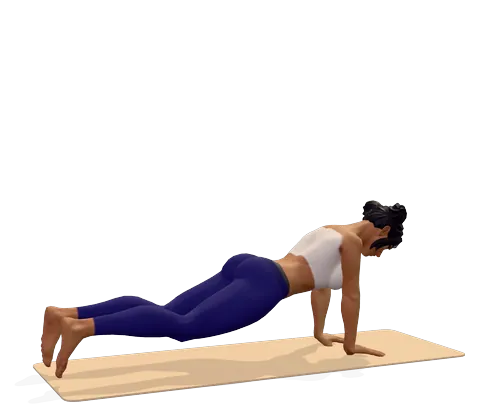 Plank PosePhalakasana
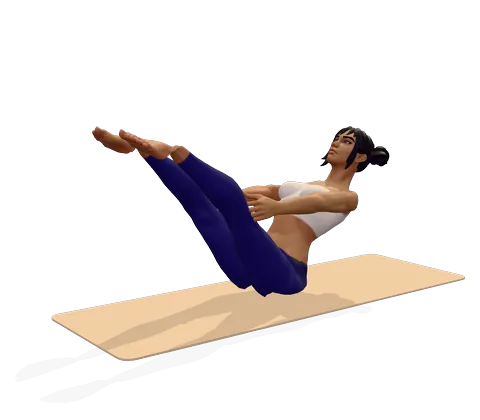 Boat PoseNaukasana
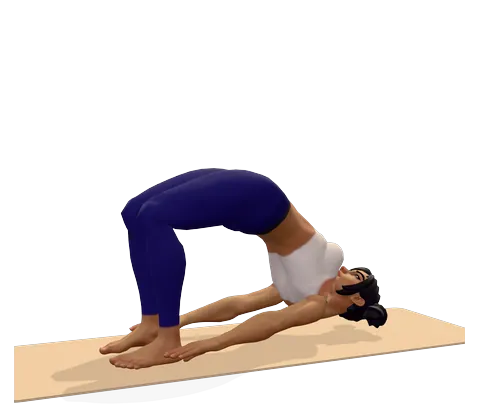 Bridge PoseSetu Bandhasana
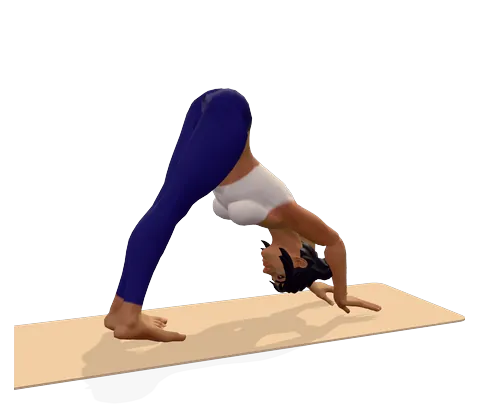 Downward-Facing Dog PoseAdho Mukha Svanasana
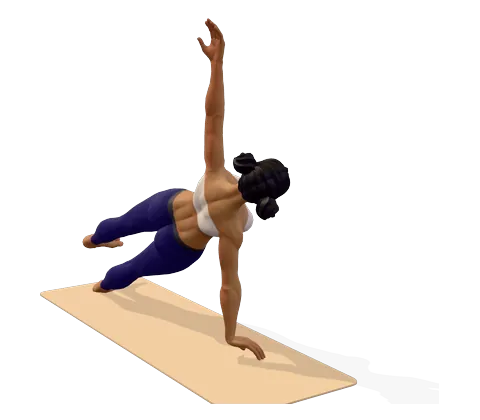 Side Plank PoseVasisthasana
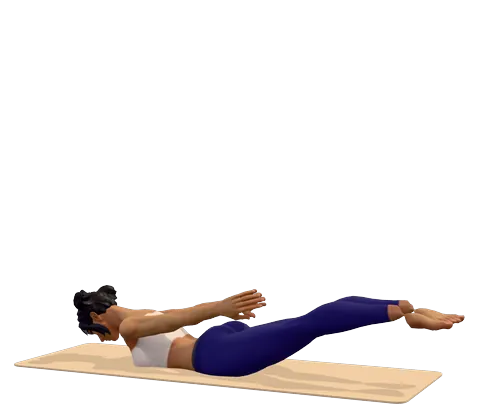 Locust PoseSalabhasana
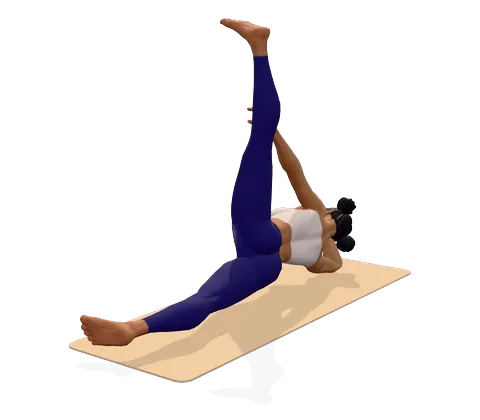 Side-Reclining Leg LiftAnantasana
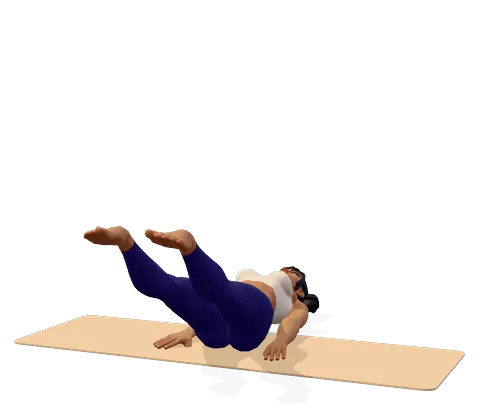 Raised Leg PoseUttanpadasana
Frequently asked questions
What is Yogalates?
Yogalates is a fitness class that combines yoga poses, stretching and breathing with Pilates exercises for the core. It builds strength and flexibility in one low-impact session.
Is Yogalates a good workout?
Yes, for core strength, flexibility, posture and balance. It is not a cardio workout, so add walking, cycling or a faster yoga style for heart fitness.
Is Yogalates good for beginners?
Very. Most exercises have easy versions and the pace is moderate. Tell the teacher about any back, neck or joint problems so they can suggest changes.
Yogalates vs Pilates: which is better?
Neither is better overall. Pilates focuses more on precise core control; Yogalates adds yoga flexibility, balance and relaxation. Choose by what you want most.
How often should I do Yogalates?
Two or three sessions a week is enough to notice a stronger core and easier movement within a month or two. On other days, walk or stretch.
Can I do Yogalates with a bad back?
Often yes, and many people with mild back pain find core work helps. Avoid deep forward bends and crunches if they hurt, and ask a physiotherapist first if you have a disc problem or sciatica.