Somatic yoga is a slow, gentle style that focuses on how movement feels from the inside rather than how a pose looks from the outside. You move at a fraction of normal speed, notice where you hold tension and practise letting it go. There is no final shape to reach, which makes it one of the most beginner-friendly ways to move, and one of the most talked-about styles online right now.
What is somatic yoga?
The somatic yoga meaning comes from the Greek word soma, "the living body as experienced from within". A simple somatic yoga definition: yoga practised with slow, mindful, often lying-down movements that retrain how your brain senses and controls your muscles.
History of somatic yoga
The word "somatics" was popularised in the 1970s by the American educator Thomas Hanna, who drew on earlier body-awareness methods. He argued that stress and habit leave some muscles permanently tight without our noticing, and taught slow movements to release them. Teachers later blended these ideas with yoga poses and breathing, and the result is what studios now call somatic yoga.
Is yoga a somatic practice?
In a broad sense, yes: all yoga asks you to pay attention to the body and breath. What makes somatic yoga different is the emphasis. Speed, depth and flexibility do not matter; sensation does.
Somatic yoga techniques
- Pandiculation: gently tighten a muscle, then release it very slowly, like a cat's morning stretch. This is the core somatic technique.
- Micro-movements: tiny, slow motions of the spine, hips or neck, repeated a few times.
- Body scanning: pausing between movements to notice what has changed.
- Somatic breathing: letting the breath move freely into the belly, sides and back.
Somatic yoga benefits: does it work?
Research on somatic yoga as a named style is very limited, so be sceptical of big promises. Based on what it asks of you, and on research into gentle yoga and mindful movement, the likely benefits of somatic movement are:
- Less muscle tension in the back, neck and shoulders, because you learn to notice and release it.
- Calmer mood: slow movement and breathing may ease stress. See yoga for anxiety and yoga for stress relief.
- Easier, more comfortable movement, especially for people who are stiff or returning after a long break.
- Better body awareness, which helps you move safely in any other style.
Somatic yoga for back pain and for the neck and shoulders is popular, and gentle movement is part of most advice for chronic back pain. Still, start slowly and ask a physiotherapist if you have a disc problem; see our yoga for back pain plan.
Weight loss and "cortisol detox"
Social media ads often sell somatic exercises for weight loss or cortisol reduction. There is no good evidence that slow floor movements cause meaningful fat loss, and "cortisol detox" is a marketing phrase, not a medical one. Relaxation may lower stress, but for weight loss you need more activity and a sensible diet. Is somatic yoga a scam, or is it legit and real? The practice is real and helpful for tension; the fast weight-loss claims are not.
Trauma and anxiety
Somatic therapies, such as Somatic Experiencing, are forms of psychotherapy delivered by trained therapists. So is somatic yoga therapy? No: a yoga class is not therapy. Somatic yoga for trauma or anxiety may help you feel safer in your body, and trauma-sensitive yoga has shown promise in small studies alongside treatment, but it should support professional care, not replace it. Stop any exercise that brings up distress.
Somatic yoga vs regular (traditional) yoga, yin and wall Pilates
| Style | Speed | Main focus |
|---|---|---|
| Somatic yoga | Very slow, continuous | Sensing and releasing muscle tension |
| Traditional Hatha or Vinyasa | Moderate to fast | Poses, strength, flexibility, breath |
| Yin yoga | Still, 3 to 5 minute holds | Deep passive stretch of connective tissue |
| Wall Pilates | Moderate | Core and leg strength using a wall |
How is somatic yoga different from yin? Yin holds still in one shape for minutes; somatic yoga keeps moving, just very slowly. Somatic yin yoga blends the two, with gentle movements before long holds. Compared with wall Pilates, it builds far less strength but more awareness and relaxation.
A 15-minute somatic yoga routine for beginners
These free somatic yoga exercises for beginners at home suit adults of any age, including seniors. Lie on a mat or carpet, move at half the speed you think is slow, and rest for a few breaths after each one.
- Arch and flatten (2 min): lie on your back, knees bent. Breathing in, gently arch your lower back; breathing out, slowly flatten it into the floor. Repeat 6 times.
- Knee sways (2 min): let both knees drift slowly to one side and back, a mini supine twist.
- Knee to chest (2 min): hug one knee in, then slowly release, as in wind-relieving pose.
- Slow bridge (2 min): lift your hips one vertebra at a time, then lower even more slowly.
- Neck release (1 min): roll your head a little to one side and back, like saying a slow "no".
- Cat-cow on hands and knees (2 min): move one vertebra at a time.
- Child's pose and body scan (4 min): notice what feels different from when you started.
Short on time? The first four moves make a 10-minute somatic yoga routine for beginners that you can also do in bed as a bedtime wind-down. Save it in the sequence builder to follow the 3D guide, or finish with guided Yoga Nidra.
Somatic exercises for kids work well as "slow-motion animal" games: a sleepy cat stretch or a snail curling up.
Somatic yoga meaning in Hindi — सोमैटिक योग: "सोमा" का अर्थ है भीतर से महसूस किया जाने वाला शरीर। सोमैटिक योग में आप बहुत धीरे-धीरे हिलते हैं, जैसे लेटकर कमर को हल्का मोड़ना और फिर धीरे से छोड़ना, ताकि मांसपेशियों का तनाव पहचानकर उसे छोड़ सकें। इससे कमर, गर्दन और कंधों की जकड़न कम हो सकती है और मन शांत होता है। वज़न तेज़ी से घटाने के दावे सही नहीं हैं।
Other types of yoga
Poses you will meet in Somatic Yoga
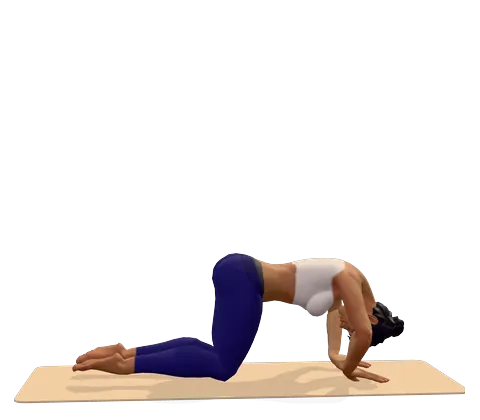 Cat PoseMarjaryasana
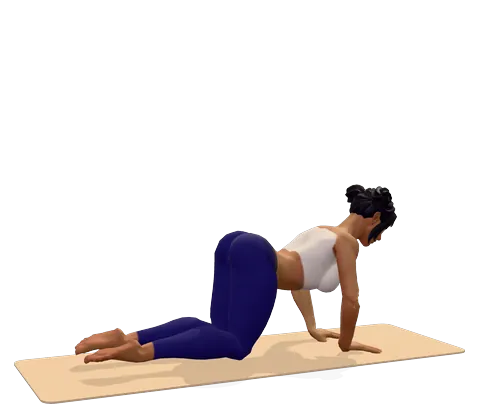 Cow PoseBitilasana
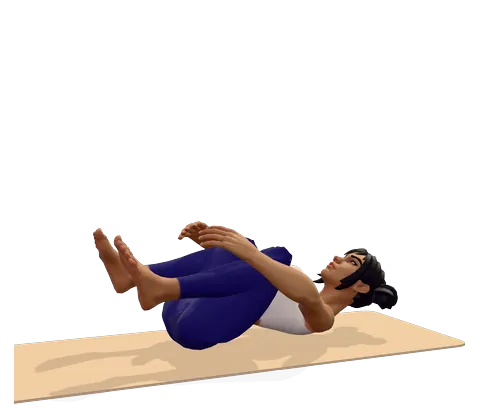 Wind-Relieving PosePavanamuktasana
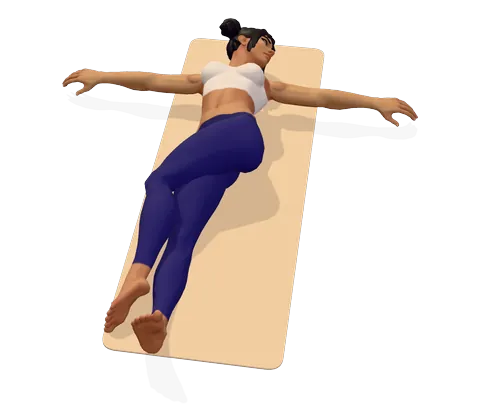 Supine Spinal TwistSupta Matsyendrasana
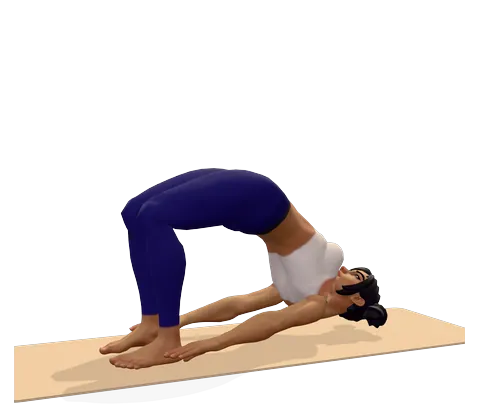 Bridge PoseSetu Bandhasana
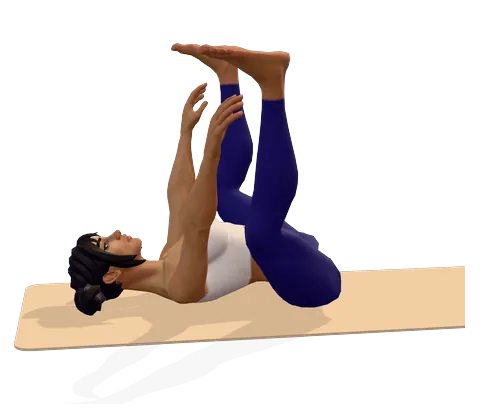 Happy Baby PoseAnanda Balasana
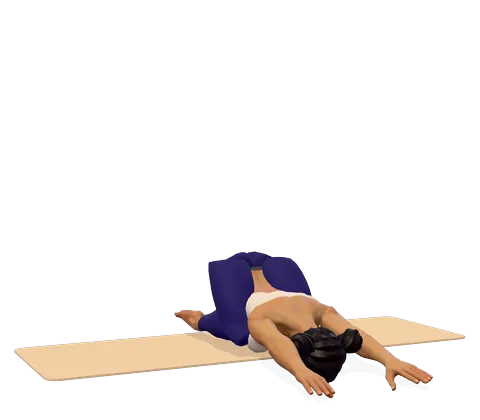 Child’s PoseBalasana
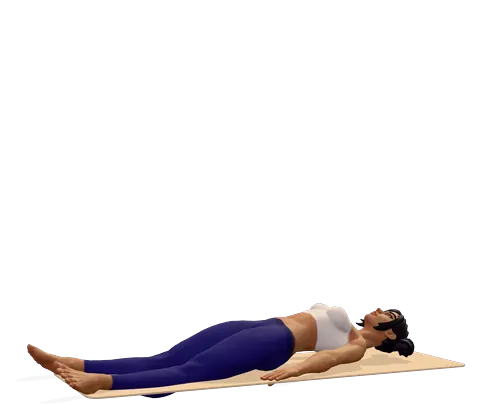 Corpse PoseSavasana
Frequently asked questions
What is somatic yoga?
Somatic yoga is a slow, gentle style that uses mindful movements, often lying down, to help you notice and release muscle tension. It focuses on how movement feels rather than how a pose looks.
Does somatic yoga work, and is it effective?
For easing muscle tension and helping you relax, many people find it helpful, and gentle mindful movement is well supported in general. Research on somatic yoga itself is limited, and claims about fast weight loss or "cortisol detox" are not supported.
Is somatic yoga good for beginners?
Very. There are no difficult poses and no need for flexibility. It is also a good choice for seniors and anyone returning after injury, with their doctor’s agreement.
Are somatic exercises yoga?
Not always. Somatic exercises come from a movement-education tradition; somatic yoga combines them with yoga poses and breathing. Both share slow, attentive movement.
Can somatic yoga help me lose weight?
Not much on its own. It burns few calories. It may help you manage stress and move more comfortably, which supports a healthy routine, but weight loss needs more activity and good eating habits.
How often should I do somatic yoga?
Ten to fifteen minutes a day, or before bed, is plenty. Consistency matters more than length.