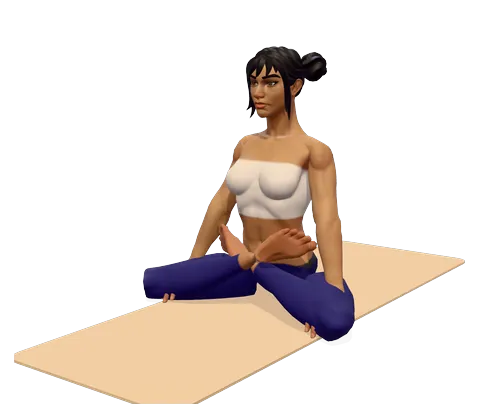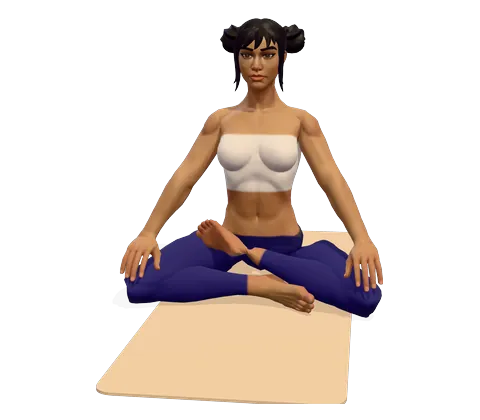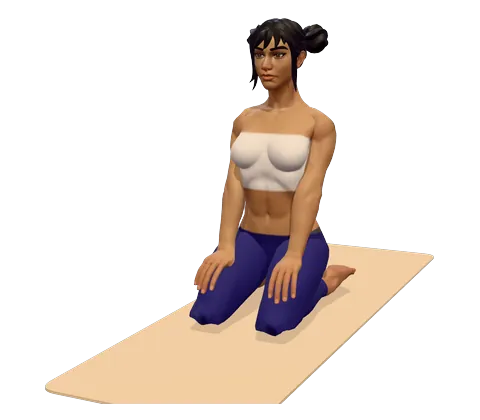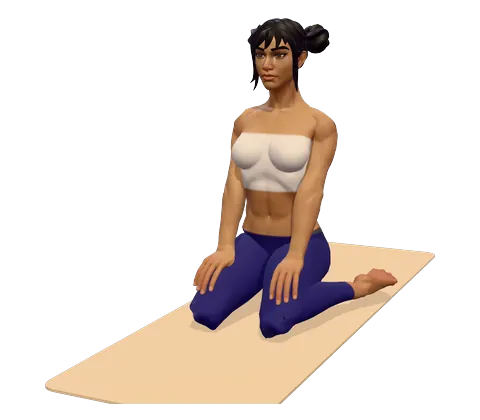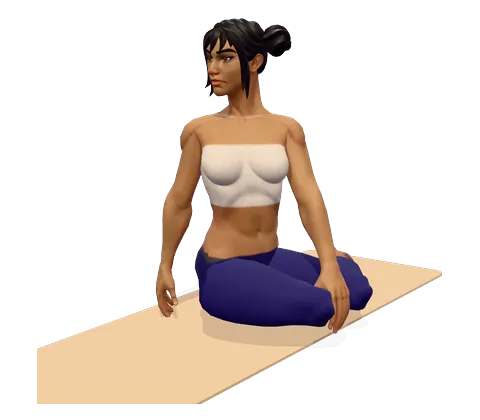
How to do Bharadvaja’s Twist step by step
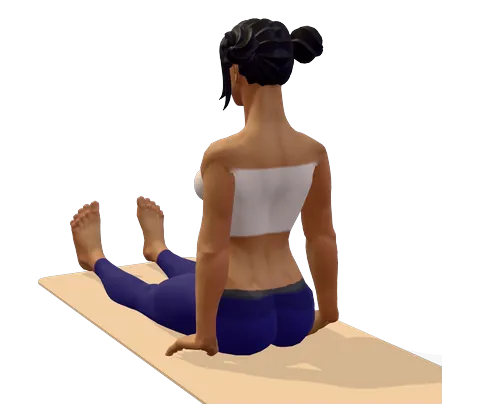
- Sit with your legs straight in front of you. Bend both knees and swing your feet to the left so they rest on the floor beside your left hip.
- If one sitting bone lifts off the floor, slide a folded blanket under your hips so the pelvis is level.
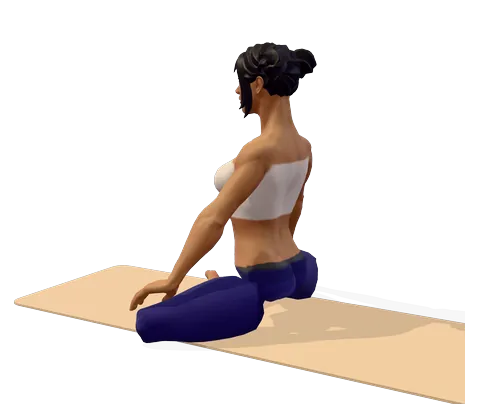
- Breathe in and lengthen your spine upward, as if the crown of your head were rising.
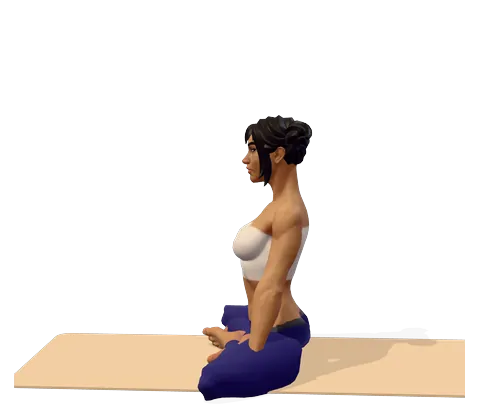
- Breathe out and turn your chest to the right, away from your feet. Place your right hand on the floor behind you and your left hand on the outside of your right knee.
- Look over your right shoulder, or keep your head facing forward if your neck prefers. Keep both shoulders level and soft.
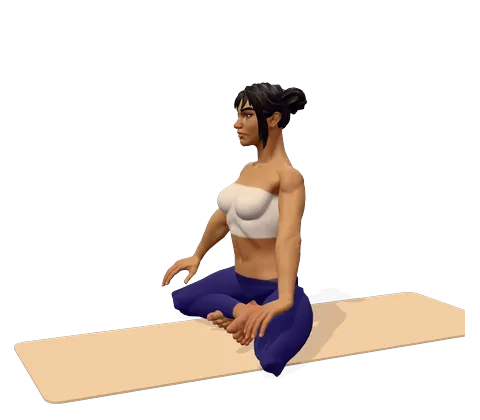
- Hold for 3–6 breaths (about 30 seconds), growing taller as you breathe in and turning a little further as you breathe out.
- Unwind as you breathe in, then swing your feet to the right side and turn to the left.
Where you feel Bharadvaja’s Twist: what it stretches and strengthens
Lengthen first, then turn gently from the ribs. In the 3D guide, turn on Body guide: areas that stretch glow green and areas that work glow saffron.
Stretches
- Side waist
- Upper back
- Shoulders
Strengthens
- Spine
Benefits and precautions
Benefits
- Gently rotates the middle and upper back, where most twisting should happen
- Stretches the chest, the shoulders and the muscles between the ribs
- Keeps the hips, knees and ankles supple in the folded-leg position
- Easy to do on a chair, so it suits beginners, seniors and office workers
- Traditionally used to support digestion; part of our yoga plan for PCOS
- Quiet and settling — a good pose near the end of a practice
Avoid or modify if
- Acute back pain, disc herniation or sciatica — twist only slightly, or use a chair, and ask your physiotherapist
- Knee or ankle injury — use the chair version instead of folding the legs
- Pregnancy — only a light turn from the upper back with the belly free, if your doctor or midwife agrees; stop if you feel any pressure
- Osteoporosis — no forceful twisting; ask your doctor which movements suit you
- Recent abdominal or spinal surgery — avoid until your doctor clears you
Bharadvaja's twist (Bharadvajasana) is a gentle seated spinal twist. Both legs fold to one side of your hips and you turn your chest the other way, using one hand on the knee and one on the floor behind you. Because the legs are not crossed and the turn comes mostly from the upper back, it is one of the easiest twists to learn and one of the easiest to adapt on a chair. This page explains how to do it, why twists are useful, the harder second version and when to be careful.
What is Bharadvaja's twist?
The pose is named after Bharadvaja, one of the seven great sages (Saptarishi) of Indian tradition. Hymns in the sixth book of the Rigveda are attributed to him and his family, and in the Mahabharata he is the father of Drona, the teacher of the Pandava and Kaurava princes. So the name sage Bharadvaja's twist simply honours him; asana means pose.
In yoga books you will see two versions. Bharadvajasana I (also written Bharadvajasana 1), shown in the 3D guide, keeps both legs folded to one side. Bharadvajasana II adds half lotus and is covered further down.
How to do Bharadvaja's twist
The steps above take you through the pose. An easy way into the leg position is to kneel in Vajrasana (thunderbolt pose) and then slide your hips off your heels onto the floor to one side. If Vajrasana itself is new to you, its page shows it step by step.
- Lift before you turn. Each breath in makes you taller; each breath out turns you. A slumped twist squeezes the lower back.
- Turn from the ribs. Let the middle back do the rotating. The lower back and neck follow a little; they do not lead.
- Light hands. The hand on the knee guides; it does not pull. The back hand stays close to your spine to help you sit upright.
- Level shoulders. If one shoulder rises toward the ear, turn less and relax it down.
How long to hold, and fitting a twist into your yoga schedule
Hold for about 30 seconds (3–6 breaths) on each side, once or twice. Twists fit best after a warm-up and before the final rest, and doing a gentle twist a few times a week is enough to feel the benefit. Practise on an empty or light stomach.
Bharadvajasana benefits
The main benefit is movement for the middle and upper back — the part of the spine best built for rotation, and the part that stiffens most at a desk. The pose also opens the chest and shoulders and keeps the hips, knees and ankles supple.
Yoga tradition links twists with digestion and with the abdominal organs. That is traditional belief rather than proven fact, but the gentle squeeze of the belly and the slow breath can feel settling. Bharadvaja's twist is one of the poses in our yoga for PCOS plan, where the aim is regular, calm practice alongside the treatment your doctor recommends.
Are yoga twists bad for your back?
For most healthy backs, no. Why are yoga twists good for you? They move the spine through a range we rarely use, which helps keep it mobile, and they are a comfortable counter to long hours of sitting. Problems usually come from forcing the turn with the arms, twisting with a rounded back, or twisting hard during an acute disc problem or with fragile bones.
Bharadvaja's twist is a lower-risk choice because the turn is shared along the spine and the legs are not locked. Yoga is not a stand-alone treatment for a bad back, but gentle movement is part of most modern advice; our yoga for back pain plan shows the gentlest twists to start with. If twisting sends pain down a leg, stop and see a physiotherapist.
Bharadvajasana 2 (Bharadvajasana II)
In the second version one foot rests on the opposite thigh in half lotus and the other leg folds back beside the hip, as in hero pose. You turn toward the half-lotus leg and, if you can, reach the back hand to hold that foot. It needs open hips and healthy knees; if half lotus is not easy, stay with Bharadvajasana I.
Supported Bharadvaja's twist: blanket and chair
A supported Bharadvaja twist pose is a regular part of Iyengar yoga. Two versions help most people:
- On a blanket: sit on one or two folded blankets with the feet off to the side. The height levels the pelvis and lets the spine lift.
- On a chair: sit sideways on a chair with the chair back beside you, feet flat and knees over ankles. Hold the chair back with both hands and turn toward it as you breathe out. It is the version to choose with sore knees, in chair yoga or at a desk.
Bharadvaja's twist vs other seated twists
Compared with Ardha Matsyendrasana, the classic seated spinal twist, Bharadvajasana needs less hip flexibility because no leg crosses over. Compared with Marichyasana C, it has no bind and no straight leg pulling on the hamstrings. That makes it a sensible first seated twist and a good prep for both.
Bharadvaja's twist contraindications and prep
Check the caution box above. In short: turn only gently with an acute back problem, osteoporosis or in pregnancy, and use the chair version if your knees or ankles do not like folding. Good Bharadvaja's twist prep includes cat–cow for the spine, a lying twist, and a minute of Vajrasana or hero pose to prepare the knees and ankles.
Health conditions this pose is used for
Frequently asked questions
What is Bharadvaja's twist good for?
It gently rotates the middle and upper back, opens the chest and shoulders, and keeps the hips, knees and ankles supple. It is a good first seated twist and easy to adapt on a chair.
How do I do Bharadvaja's twist?
Sit with both feet folded to one side of your hips, sit tall, then turn your chest the other way with one hand on the opposite knee and the other on the floor behind you. Hold 3–6 breaths and change sides.
What is the difference between Bharadvajasana 1 and 2?
In Bharadvajasana I both legs fold to one side. In Bharadvajasana II one foot is in half lotus and the other leg folds back beside the hip, which is harder on the knees.
Are yoga twists bad for your back?
Not for most people, when done gently with a long spine. Avoid forcing the twist, and ask a physiotherapist first if you have a disc problem, sciatica or osteoporosis.
Can I do Bharadvaja's twist on a chair?
Yes. Sit sideways on a chair with the back of the chair beside you, hold it with both hands and turn toward it as you breathe out. It is the easiest version.
Who should not do Bharadvaja's twist?
Take care with acute back pain or a disc problem, knee or ankle injuries, osteoporosis, pregnancy and recent abdominal or spinal surgery. The chair version with a small turn is the safest option.
Who was Bharadvaja?
A Vedic sage, one of the seven great sages of Indian tradition, linked with hymns of the Rigveda and known in the Mahabharata as the father of Drona.
This page is for general education. Check with your doctor before starting yoga if you are pregnant, have a medical condition or an injury. Stop if you feel pain, dizziness or shortness of breath.