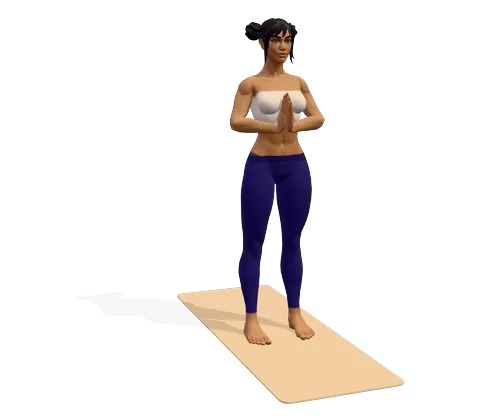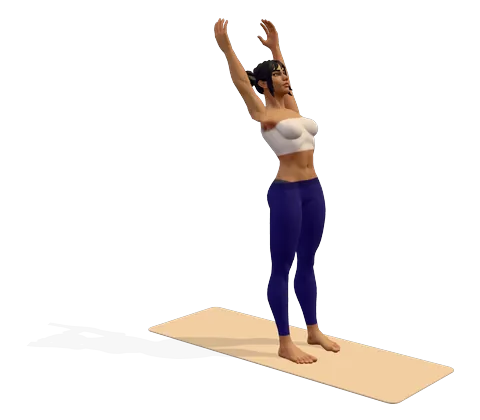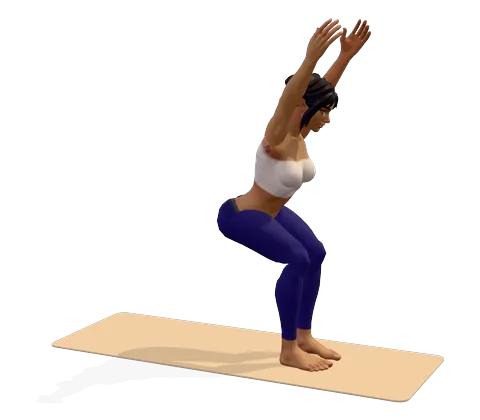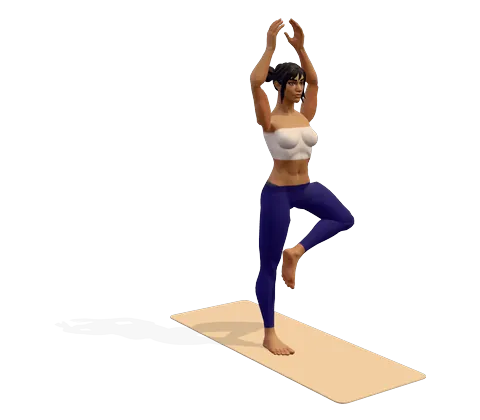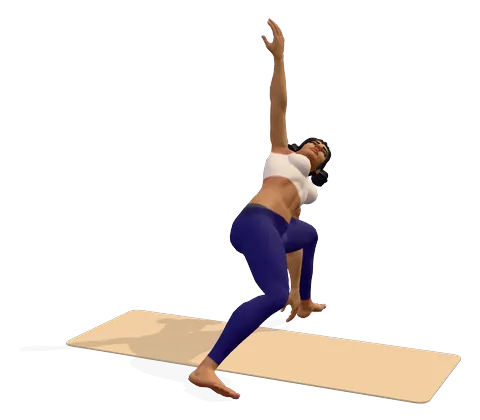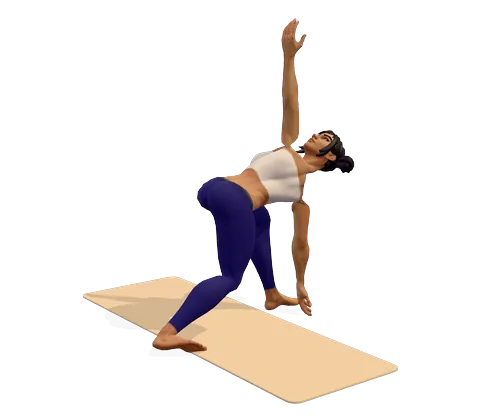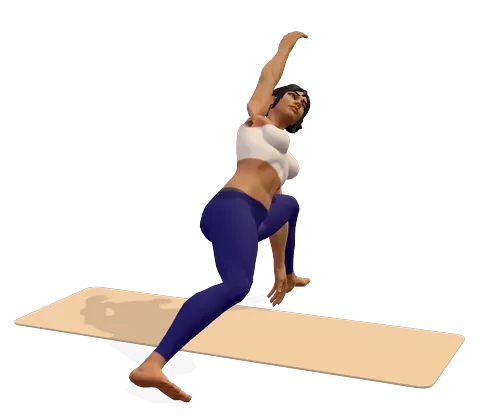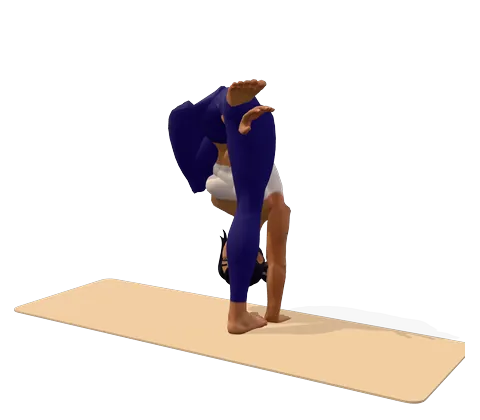
How to do Half Bound Lotus Forward Bend step by step
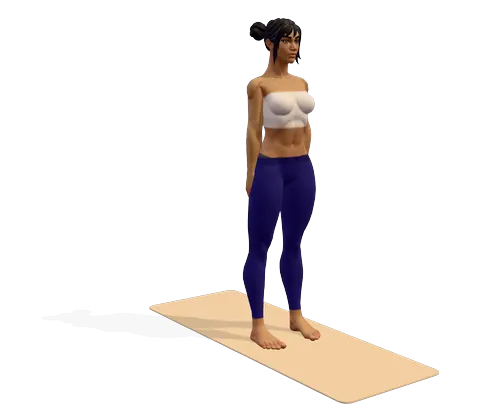
- Stand in Mountain Pose. Shift your weight onto your right foot and keep a soft right knee.
- Bend your left knee, turn it out from the hip, and use your hands to place the top of your left foot high on your right thigh, heel near the navel. Stop if the knee hurts.
- Reach your left arm behind your back and hold your left foot, or a strap looped around it. Stand tall for one breath.
- Breathing out, fold forward from the hips over your right leg. Keep the left knee pointing down, not forward.
- Place your right hand on the mat beside your right foot, or on a block. Let your head hang.
- Hold for 15–20 seconds (3–5 breaths). Keep the standing leg strong and your weight over the whole foot.
- Breathing in, lift your chest halfway, then rise to standing with a long back. Release the foot slowly with your hands and repeat standing on the left leg.
Where you feel Half Bound Lotus Forward Bend: what it stretches and strengthens
Hold your half-lotus foot behind your back and fold down slowly. In the 3D guide, turn on Body guide: areas that stretch glow green and areas that work glow saffron.
Stretches
- Hamstrings
- Hip flexors
- Shoulders
Strengthens
- Front thighs
- Ankles
Benefits and precautions
Benefits
- Stretches the hamstrings and calf of the standing leg
- Opens the hip of the lotus leg through outward rotation
- Stretches the front of the shoulder and chest on the binding side
- Strengthens the standing thigh, ankle and foot and builds balance
- Demands steady attention, which many people find calming
- Prepares the body for full lotus and other advanced hip openers
Avoid or modify if
- Any knee injury, meniscus problem or knee pain in lotus — do not practise the lotus leg; use a tree-pose foot position instead
- Hip replacement, hip injury or sacroiliac pain — avoid the half lotus rotation
- High blood pressure, glaucoma or eye pressure problems — the head goes below the heart; avoid the fold
- Balance problems, vertigo or ankle injury — practise near a wall or choose a two-footed forward bend
- Low back or disc problems — keep the fold shallow or skip it
- Pregnancy — avoid this pose
Half bound lotus forward bend (Ardha Baddha Padmottanasana) is an advanced standing pose that combines three skills: a half lotus leg, a bind behind the back and a one-legged forward fold. In the full half bound lotus standing forward bend, one foot sits high on the opposite thigh, the same-side hand holds that foot from behind, and the other hand rests on the floor beside the standing foot. It is a level-4 pose on this site. The main risk is to the knee of the lotus leg, so the prerequisites below are not optional.
Ardha Baddha Padmottanasana meaning
The name joins five Sanskrit words: ardha means "half", baddha "bound", padma "lotus", uttana "intense stretch" and asana "pose". So it is the "half bound lotus intense stretch pose". It is part of the standing sequence of Ashtanga yoga and is taught in some Hatha classes too.
What is half lotus pose?
Half lotus (Ardha Padmasana) is a half lotus sitting position: one foot rests on the opposite thigh, sole facing up, and the other foot rests under the opposite knee. The standing half lotus pose uses the same leg shape while you balance on one foot, so you should be comfortable in seated half lotus pose yoga first.
Prerequisites: are you ready for this pose?
Try the full half bound lotus forward fold only when all of these are true:
- You can sit in half lotus on both sides for a minute with no knee pain at all, and the lotus knee rests close to the floor.
- You can fold into standing forward bend with your palms or fingertips on the floor.
- You can balance in Tree Pose for 30 seconds on each leg.
- Your shoulder allows the arm behind your back without strain.
If any of these is missing, practise the preparation stages below instead. A knee that is forced into lotus can be injured, and that injury can take months to heal.
How to do Ardha Baddha Padmottanasana safely
The steps above match the 3D figure, which stands on the right leg with the left foot in half lotus. Some extra points for knee safety:
- Rotate from the hip, not the knee. Open the thigh outward first, then bring the foot up. The knee should only bend, never twist.
- Keep the lotus foot flexed slightly (toes spread) so the ankle does not sickle.
- Foot high on the thigh, close to the hip crease. A foot low on the thigh pulls the knee sideways when you fold.
- Knee pointing down as you fold. If it swings forward, the lotus is too tight for this pose today.
- Come out slowly, releasing the foot with your hands, not by kicking it free.
Preparation stages for beginners
- Half lotus tree pose: place the foot in half lotus on the thigh while standing, hold it with the same hand in front, and stand tall. No fold.
- Bind with a strap: loop a strap around the lotus foot and hold it behind your back.
- Hands on blocks: fold halfway with the free hand on a tall block.
- Full pose: hand on the floor, head down, bind held.
If half lotus hurts at any stage, use the tree-pose foot position (sole on the inner thigh) and fold with your hand on a block. You lose the lotus but keep the balance and hamstring stretch.
Half bound lotus forward bend benefits
The half bound lotus standing forward bend benefits come from the three parts of the pose. The forward fold stretches the hamstrings and calf of the standing leg. The half lotus rotates the thigh outward and opens the hip. The bind draws the shoulder back and opens the front of the chest. Meanwhile the standing thigh, ankle and foot work hard to balance you. Because so much happens at once, the pose trains focus, and many people find it quietening.
Half lotus pose benefits in general, a more open hip and a steadier seat for meditation, also build over time. Lotus shapes cause knee and back strain mainly when people force them, so let the hip open over months, not in one class.
Muscles stretched and worked
| Stretched | Strengthened |
|---|---|
| Hamstrings and calf of the standing leg | Quadriceps of the standing leg |
| Hip of the lotus leg (outward rotation) | Ankle and foot muscles of the standing leg |
| Front of the shoulder and chest on the binding side | Deep core, for balance |
The Body guide on the 3D figure shows the hamstrings, hip flexors and shoulders in green and the working thigh and ankle in saffron.
Standing vs seated half bound lotus forward bend
The seated version, Ardha Baddha Padma Paschimottanasana, is the half bound lotus seated forward bend: you sit with one leg straight, the other foot in half lotus, bind the foot from behind and fold over the straight leg. It removes the balance challenge, so many people learn the bind there first. It is a yoga seated forward bend taught in the Ashtanga primary series. For simpler seated forward bend pose yoga options, see Paschimottanasana and head-to-knee pose.
Among standing forward bend yoga poses, Uttanasana is the base: two feet down and no lotus. Master it before adding the half lotus.
Who should not do this pose?
Do not practise the lotus leg with any knee injury, meniscus problem or knee pain in lotus; people with knee pain should choose other forward bending yoga poses. Avoid it after a hip replacement, with SI joint pain, in pregnancy, and with high blood pressure or glaucoma because the head goes below the heart. If you have a disc problem or back pain, ask your physiotherapist first. You can build the base poses (Tree Pose and forward bends) with voice guidance in our guided sessions.
Frequently asked questions
What is Ardha Baddha Padmottanasana?
It is the half bound lotus standing forward bend: you stand on one leg, place the other foot in half lotus, hold that foot from behind and fold forward with your free hand on the floor.
Is the half bound lotus forward bend safe for the knees?
Only if you can already sit in half lotus without any knee pain. The rotation must come from the hip. If the knee hurts, use a tree-pose foot position instead.
What if I cannot reach my foot behind my back?
Loop a strap around the lotus foot and hold the strap, or hold the foot in front with the same hand and skip the bind.
What are the benefits of Ardha Baddha Padmottanasana?
It stretches the hamstrings of the standing leg, opens the hip of the lotus leg, stretches the front of the shoulder and builds balance and focus.
How long should I hold the pose?
Hold for 15–20 seconds (3–5 breaths) on each side. Come out earlier if the knee or the balance feels unsafe.
Is there a seated version?
Yes. Ardha Baddha Padma Paschimottanasana is the seated half bound lotus forward bend. It removes the balance and is a good way to learn the bind.
Can beginners do the half bound lotus forward bend?
Not the full pose. Beginners should first practise standing forward bend, Tree Pose and seated half lotus, then the preparation stages on this page.
This page is for general education. Check with your doctor before starting yoga if you are pregnant, have a medical condition or an injury. Stop if you feel pain, dizziness or shortness of breath.