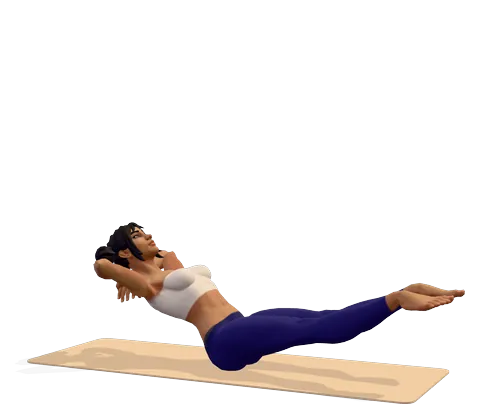
How to do Half Boat Pose step by step
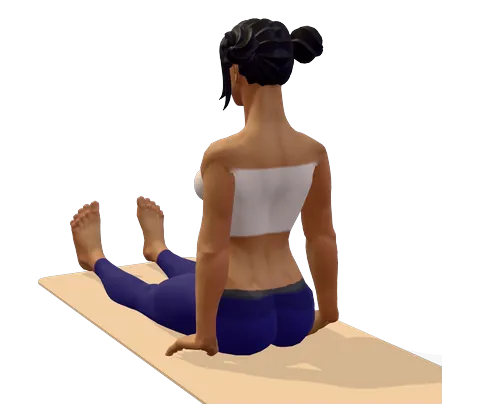
- Sit in Staff Pose with your legs straight and together in front of you.
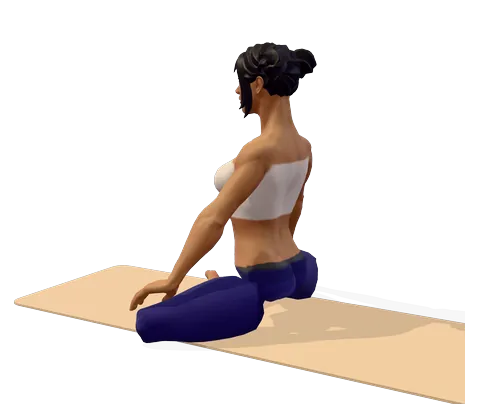
- Interlace your fingers and place your hands behind your head, just above the neck. Open your elbows out to the sides.
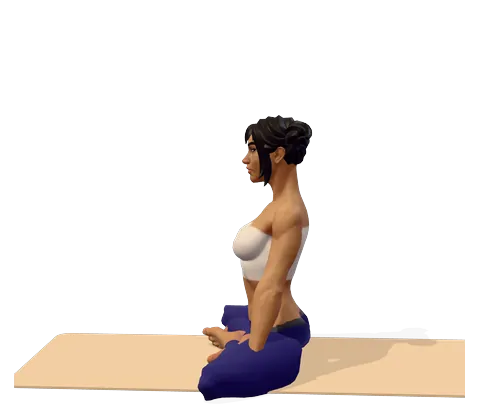
- Breathe out and lean your upper body back until you feel your abdominal muscles switch on. Balance on your buttocks, just behind the sitting bones.
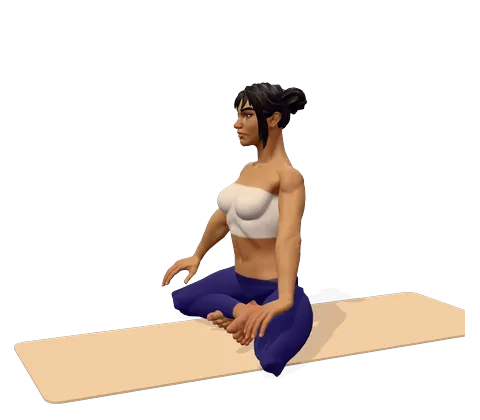
- At the same time, lift your straight legs so your feet are roughly at eye level, about 30 degrees off the floor. Keep the legs together and the toes pointing forward.
- Keep your chest broad and your gaze toward your toes. Your body makes a wide, shallow V.
- Hold for 10–20 seconds (2–4 breaths) and keep breathing normally. Do not hold your breath.
- Breathe out, lower your legs and sit up. Rest in Staff Pose, then repeat once or twice if you like.
Where you feel Half Boat Pose: what it stretches and strengthens
Hover your shoulders and feet low and keep breathing. In the 3D guide, turn on Body guide: areas that stretch glow green and areas that work glow saffron.
Stretches
- Hip flexors
Strengthens
- Abs
- Side waist
- Front thighs
Benefits and precautions
Benefits
- Strengthens the abdominal muscles, including the deep core and the obliques
- Works the hip flexors and the front of the thighs that hold the legs up
- Builds the core control that protects the lower back in daily movements
- Improves balance and body awareness while sitting on the buttocks
- Prepares for full Boat Pose and arm balances
Avoid or modify if
- Pregnancy, and after childbirth with abdominal separation (diastasis recti) — avoid; ask your doctor or physiotherapist about safe core work
- Hernia or recent abdominal surgery — avoid until your doctor clears you
- Slipped disc or acute low back pain — avoid; the lever of straight legs loads the lower back
- Neck problems — keep the hands supporting the head and do not pull the head forward
- Tailbone (coccyx) pain — sit on a folded blanket or skip the pose
- High blood pressure or heart disease — keep the hold short and never hold your breath
Half boat pose (Ardha Navasana) is a seated core pose in which you lean back, hold your head with interlaced fingers and lift straight legs a little off the floor, so your body makes a long, shallow V. It is shown here as it is taught in classic hatha and Iyengar yoga. It works the abdominal muscles hard in a short time. This page explains what the name means, how to do it correctly, the benefits, easier variations and how it compares with full boat pose.
Half boat pose Sanskrit meaning
The half boat pose Sanskrit name has three parts: ardha means half, nava means boat and asana means pose. Your body is the hull of the boat and your legs and upper body are its ends. It is called "half" because both ends are lower and the boat is flatter than in full boat pose (Paripurna Navasana).
Different schools use the name half boat for different shapes. In many gym and vinyasa classes, "half boat" means boat pose with bent knees. In classic hatha and Iyengar yoga, Ardha Navasana is the version shown by the 3D figure: straight legs, low, with the hands behind the head. Both are good core exercises.
What is boat pose, and what is half boat?
What is a boat pose exercise? It is any seated balance on the buttocks where you lift the legs and upper body together and hold, like a static sit-up. What is boat pose in full form? The legs rise high, around 60 degrees, the back is straight and upright, and the arms reach forward. Half boat keeps both the legs and the torso lower, which puts the load right on the abdominal muscles.
How to do half boat pose correctly
The steps above follow the 3D guide. These cues fix the most common mistakes:
- Lean back only as far as you can control. The lower you go, the harder it is. If your lower back sags or aches, come up a little.
- Hands support the head, they do not pull it. Keep the elbows wide and the neck long, as if you are resting your head in a hammock.
- Legs straight and together. Squeeze the inner thighs lightly and press out through the heels.
- Breathe. Short, smooth breaths are fine. Holding your breath raises blood pressure.
- Quality over time. Three short, steady holds are better than one long, shaky one.
Half boat pose benefits
The main half boat pose benefits are core strength and control. The abdominal muscles, including the obliques at the sides of the waist, work to hold the upper body and legs off the floor, while the hip flexors and the front of the thighs keep the straight legs lifted. A stronger core helps you sit, lift and bend with better control. Many people also notice better balance, because the pose asks you to stay steady on a small base.
Like other boat pose benefits, these come from regular practice, two or three times a week. One pose will not flatten the belly by itself; for that, see our honest yoga for belly fat plan. You can also add it to a guided session or the Core Strength session.
Muscles worked and stretched
| Worked | Stretched |
|---|---|
| Rectus abdominis and deep core | Hip flexors, lengthening slightly as the torso leans back |
| Obliques (sides of the waist) | |
| Quadriceps and hip flexors holding the legs up |
Half boat pose for beginners and variations
How to do boat pose for beginners safely? Build the shape in stages. These half boat pose variations help:
- Bent-knee half boat: keep the knees bent and the shins parallel to the floor. This is the easiest version and how most yoga boat pose beginners start.
- Hands on the floor: rest your fingertips on the floor behind your hips for support.
- One legged half boat pose: keep one foot on the floor and lift the other straight leg. Switch sides.
- Arms forward: instead of hands behind the head, reach the arms forward, parallel to the floor.
- Half boat pulses: move slowly between half boat and full boat pose for a stronger core workout.
Advanced students sometimes try half lotus boat pose (Ardha Padma Navasana), with one foot in half lotus, or the half bound lotus boat pose with one arm wrapped behind. These need open hips and are not for beginners.
Boat yoga pose for kids is usually a playful bent-knee version: "sail your boat" and rock gently. Keep holds short. See yoga for kids.
What to do after half boat
Release the belly after core work. Hug your knees to your chest lying down, then sit up for a gentle twist such as Half Lord of the Fishes pose. The Ardha Matsyendrasana for beginners version, with the lower leg straight, is enough.
Boat pose vs half boat pose
| Full boat pose (Paripurna Navasana) | Half boat pose (Ardha Navasana) | |
|---|---|---|
| Legs | High, about 60 degrees | Low, feet at about eye level |
| Torso | Upright, back straight | Leaning further back |
| Arms | Reaching forward | Hands behind the head |
| Main work | Hip flexors, back and core | Abdominal muscles |
Is half boat a yoga pose for back pain?
Not during a flare-up. Straight lifted legs act like a long lever, and if your core cannot hold them the load falls on the lower back. For people without back pain, a strong core may help protect the back over time, but if you already have low back pain, gentler yoga poses for low back pain come first, such as bridge pose. Our yoga for back pain plan lists safer asanas for back pain relief, gentle workouts and poses for back pain, including more than one yoga pose for lower back pain. Chair yoga poses for back pain suit people who cannot get to the floor. If a disc problem has been diagnosed, ask your physiotherapist first.
Frequently asked questions
What is the difference between boat pose and half boat pose?
In full boat pose the legs rise high and the back is upright. In half boat pose both the legs and the torso are lower, with the hands behind the head, so the abdominal muscles work harder.
What are the benefits of half boat pose?
It strengthens the abdominal muscles, obliques and hip flexors, improves balance on a small base and builds core control for daily movement and harder poses.
How long should I hold half boat pose?
Hold for 10–20 seconds and repeat two or three times, with a short rest in between. Keep breathing throughout.
Why does my lower back hurt in half boat pose?
Your core cannot yet hold the leg lever, so the back takes the load. Bend your knees, lean back less, or keep your hands on the floor.
Is half boat pose good for beginners?
The bent-knee version is. Start there, then straighten one leg at a time before trying both straight legs.
Who should not do half boat pose?
Avoid it in pregnancy, with abdominal separation after birth, a hernia, recent abdominal surgery, a slipped disc or acute low back pain.
This page is for general education. Check with your doctor before starting yoga if you are pregnant, have a medical condition or an injury. Stop if you feel pain, dizziness or shortness of breath.