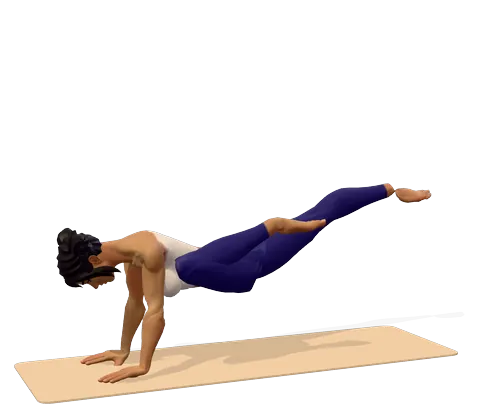
How to do One-Legged Crow Pose step by step
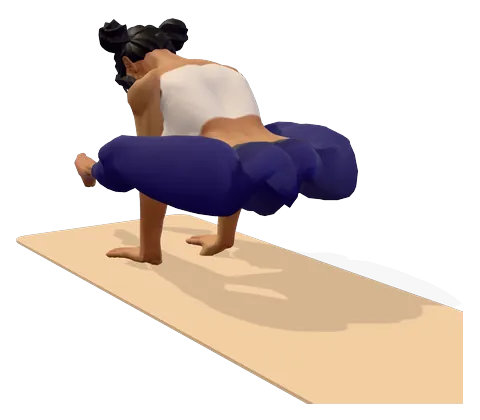
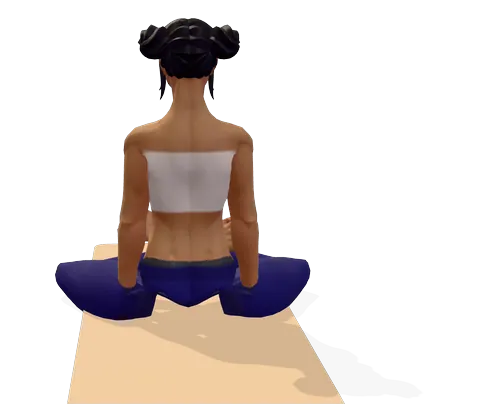
- Warm up your wrists, shoulders, hips and core. Squat with your feet together, knees wide, and place your palms flat on the mat shoulder-width apart, fingers spread.
- Bend your elbows back and lift your hips. Rest your knees high on the backs of your upper arms, close to the armpits.
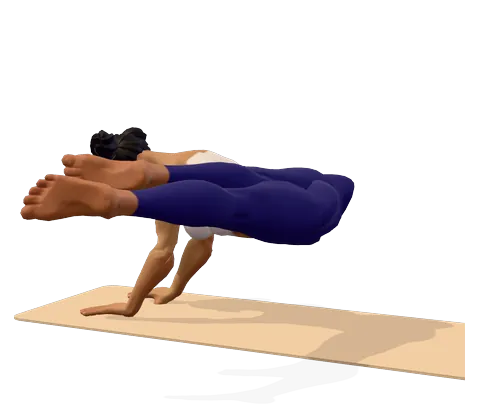
- Look forward, lean your weight into your hands and lift both feet into Crow Pose (Bakasana). Hold here for a breath.
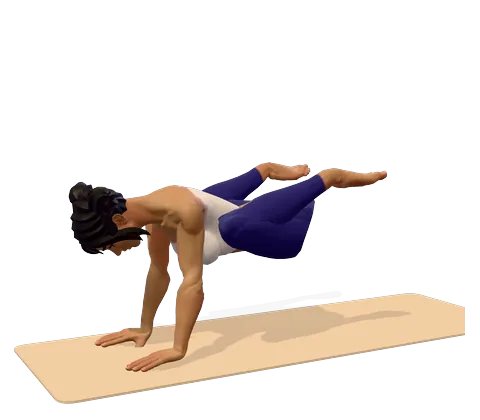
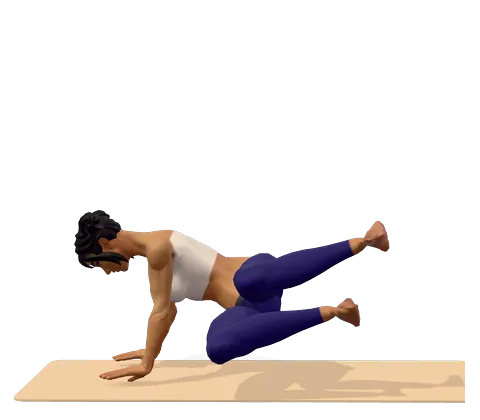
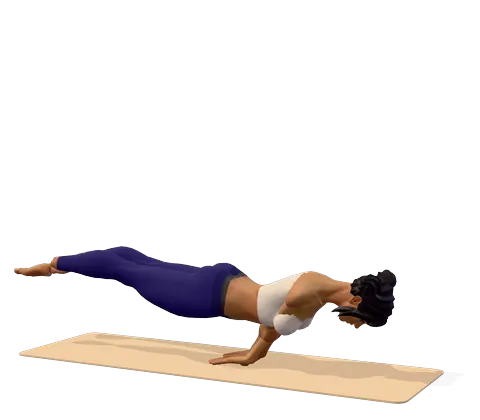
- Press your left knee firmly into your left upper arm. Draw your right knee toward your chest, then slowly extend your right leg straight back, level with your hips.
- Point the right toes, squeeze the right thigh and keep your elbows over your wrists. Round your upper back slightly and pull your belly in.
- Stay for about 10 seconds (1–3 breaths).
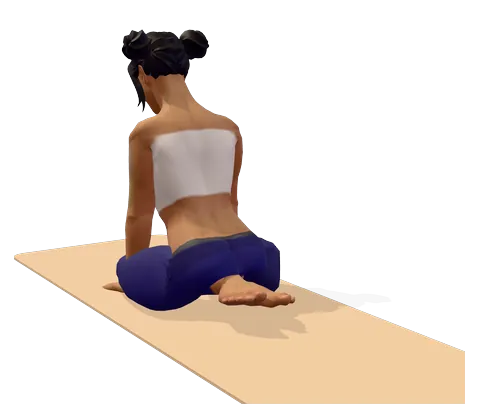
- Bend the right knee back onto its arm, lower both feet to the floor and rest in Child’s Pose. Repeat with the left leg extended.
Where you feel One-Legged Crow Pose: what it stretches and strengthens
Keep one knee high on your arm and extend the other leg back. In the 3D guide, turn on Body guide: areas that stretch glow green and areas that work glow saffron.
Stretches
- Upper back
Strengthens
- Arms
- Wrists
- Abs
Benefits and precautions
Benefits
- Builds strength in the arms, wrists and shoulders
- Works the deep core and abdominal muscles hard
- Trains balance and body control on the hands
- Stretches and broadens the upper back
- Strengthens the glutes and back of the extended leg
- Prepares you for harder arm balances such as Eka Pada Koundinyasana and Eka Pada Galavasana
Avoid or modify if
- Wrist injury, arthritis or carpal tunnel syndrome — avoid this pose
- Shoulder or elbow injury — avoid; the arms carry all of your weight
- High blood pressure, heart disease or glaucoma — avoid, because the head is low and the effort is strong
- Pregnancy — avoid, because of the belly pressure against the thighs and the risk of falling
- Recent abdominal surgery or a hernia — avoid the strong core effort
- If you cannot yet hold Crow Pose steadily for 20–30 seconds, stay with Crow and its preparations
One-legged crow pose (Eka Pada Bakasana) is an advanced arm balance built on Crow Pose. You balance on your hands with one knee pressing into the back of the upper arm while the other leg stretches straight back, parallel to the floor. It asks for strong wrists and shoulders, a firm core and good control of your weight. If you are still learning Crow Pose, read the prerequisites below before trying this version.
What is Eka Pada Bakasana? One-legged crow pose Sanskrit and meaning
The one-legged crow meaning is literal: eka means "one", pada means "foot" or "leg", baka means "crane" and asana means "pose". The Sanskrit for crow pose is usually given as Bakasana, although baka is really a crane and kaka is a crow. In English the names crow and crane are used loosely, and in many classes crane vs crow pose simply means bent arms (crow) or straight arms (crane).
Eka Pada Bakasana 1 and 2
There are two classic forms. In Eka Pada Bakasana 1, shown by the 3D figure, one knee stays on its arm and the other leg extends straight back. In Eka Pada Bakasana 2, one leg stays bent on its arm while the other leg reaches forward, resting over the back of the upper arm. Version 2 needs more hip and hamstring flexibility and is usually learned later.
Prerequisites: are you ready?
This is a level-4 pose. Try it only when all of these are true:
- You can hold Crow Pose with steady breathing for 20–30 seconds and come down with control.
- You can hold Plank Pose for a minute and lower through Chaturanga without the shoulders dropping.
- Your wrists are pain-free when you bear weight on them.
- You have no uncontrolled high blood pressure, heart condition, glaucoma or current pregnancy.
Always put a folded blanket or cushion in front of your face when you practise arm balances. Falling forward onto the nose is the most common accident.
How to do one-legged crow pose: practice tips
The 3D guide shows the left knee on the left arm with the right leg extended first. For good Eka Pada Bakasana practice, focus on these points:
- Weight forward, not up. Balance comes from leaning your chest forward until the feet become light, not from jumping.
- Squeeze the standing knee. The bent leg that stays on the arm is your anchor. Hug it in hard before you move the other leg.
- Extend slowly. First pull the free knee to your chest, then straighten the leg back. Kicking it out throws you off balance.
- Hug the elbows in. Keep the elbows over the wrists, not splaying out to the sides.
- Look ahead. Gaze at a spot on the floor in front of your hands; looking at your feet tips you back.
Hold for 1–3 breaths per side. Two or three short, clean attempts are better than one long, shaky hold.
Crow pose for beginners: building up to one leg
If you are wondering how to do Bakasana for beginners, these are the steps most teachers use before one leg comes off. This yoga crow pose for beginners path also works as prep for crow pose on days you feel less strong:
- Poses to prepare for crow pose: Garland Pose for the hips, Plank and Chaturanga for the arms, and Boat Pose for the core.
- Crow pose with blocks: stand on a block so your knees reach higher on the arms and lift-off is easier.
- Baby crow yoga pose: rest on your forearms instead of your hands. One-legged baby crow pose is a gentle way to practise extending one leg with less risk.
- One foot at a time: in regular crow, lift one foot, then the other, before trying to extend a leg.
One-legged crow pose benefits
This pose shares the crow pose benefits of arm, wrist and core strength, and adds more. Because one leg is extended, your centre of gravity shifts back, so the abdominal muscles, glutes and the back of the extended leg must work harder. The upper back rounds and broadens to support the shoulders. Many people find arm balances build focus, because you cannot hold them with a wandering mind.
| Stretched | Worked |
|---|---|
| Upper back, between the shoulder blades | Arms: triceps, shoulders and chest |
| Hips of the bent leg | Wrists and forearms |
| Abdominals and deep core; glutes of the extended leg |
One-legged crow pose variations and yoga poses like crow
Most one-legged yoga poses are standing balances. Here, one leg is lifted while you balance on your hands, which is why this yoga pose with one leg extended leads naturally into other arm balances:
- Crow pose vs frog stand: the frog stand from gym training puts the knees on the outside of bent elbows, with the arms more bent. Crow places the knees higher on straighter arms.
- Flying crow: in Flying Pigeon (Eka Pada Galavasana), one shin is crossed over the upper arms and the other leg extends back. It needs open hips. How to do flying crow pose step by step: sit in a figure-four squat, hook the foot around the upper arm, lean forward and extend the back leg.
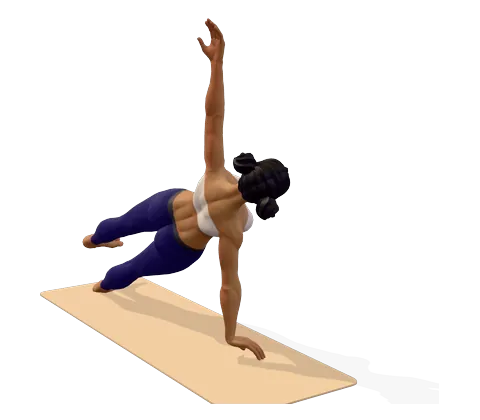
- One-legged side crow: from Side Crow, extending the legs leads into Eka Pada Koundinyasana I. Eka Pada Koundinyasana 2 (II) is a non-twisted arm balance with one leg forward over the arm. Side crow pose benefits include more work for the obliques because of the twist.
- Crow pose to handstand: very experienced students press from crow up to handstand. This needs years of practice and a teacher.
After your attempts, rest in Child's Pose and stretch the wrists gently. For a simple crow pose yoga flow, try Garland, Crow, one-legged crow on each side, then Child's Pose.
Frequently asked questions
What is one-legged crow pose?
One-legged crow (Eka Pada Bakasana) is an arm balance in which you balance on your hands with one knee on the back of an upper arm and the other leg extended straight back.
Is one-legged crow harder than crow pose?
Yes. Extending one leg shifts your weight back, so your core and arms work harder to stay balanced. Learn a steady Crow Pose first.
How long should I hold Eka Pada Bakasana?
About 10 seconds, or 1–3 breaths, on each side. Short, controlled holds are best while you are learning.
What is the difference between Eka Pada Bakasana 1 and 2?
In version 1 the free leg extends straight back. In version 2 the free leg reaches forward over the back of its arm, which needs more hamstring and hip flexibility.
Why do I fall forward in one-legged crow?
Usually because you lean too far before your core is engaged. Pull the belly in, round the upper back slightly, and keep a cushion in front of your face.
Who should not do one-legged crow pose?
Avoid it with wrist, elbow or shoulder injuries, high blood pressure, heart disease, glaucoma, a hernia, after recent abdominal surgery and during pregnancy.
Can beginners try one-legged crow?
Not straight away. Beginners should practise preparation poses, Crow Pose with a block and baby crow first. Most people need weeks or months of regular practice.
This page is for general education. Check with your doctor before starting yoga if you are pregnant, have a medical condition or an injury. Stop if you feel pain, dizziness or shortness of breath.