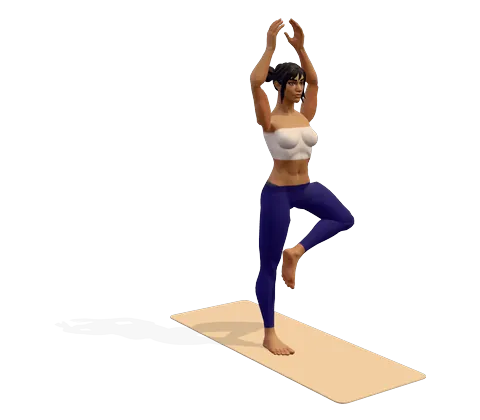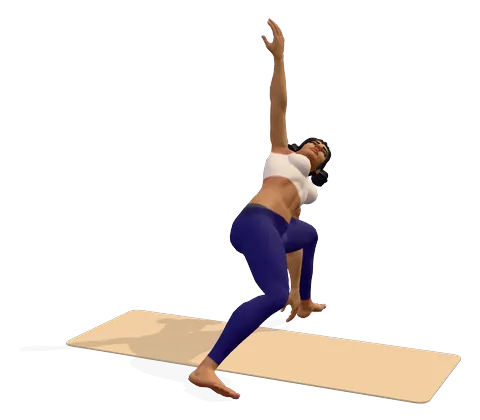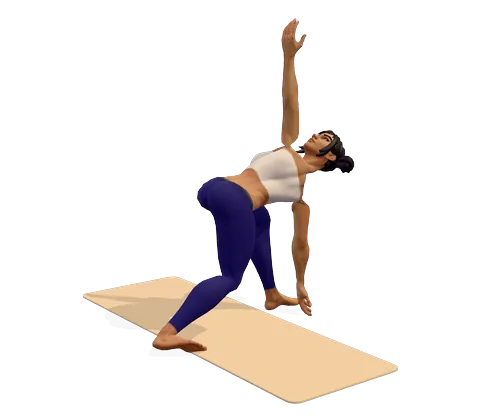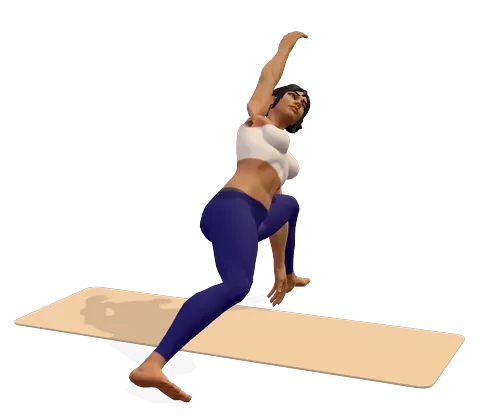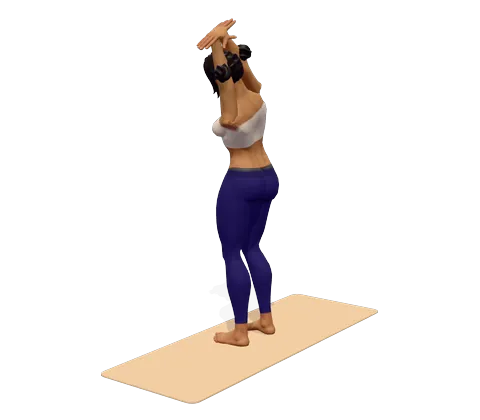
How to do Swaying Palm Tree Pose step by step
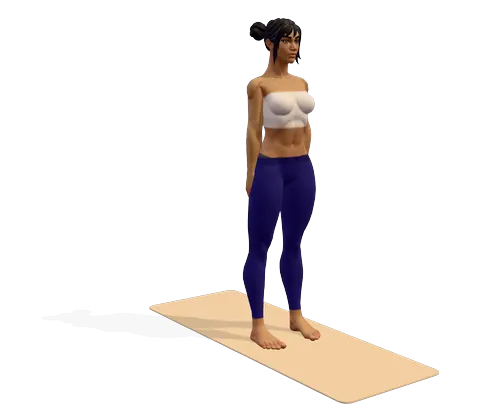
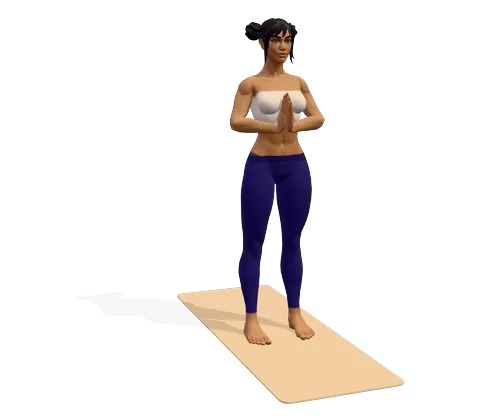
- Stand tall in Mountain pose, then step your feet a little wider than your hips, toes pointing forward.
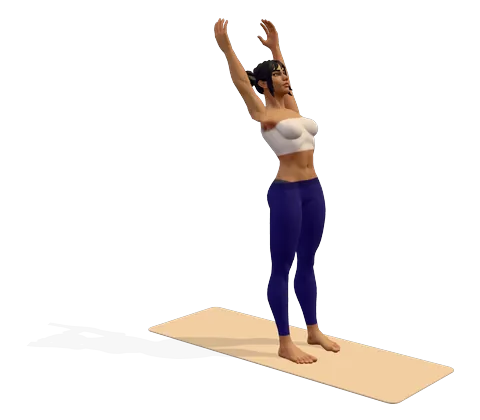
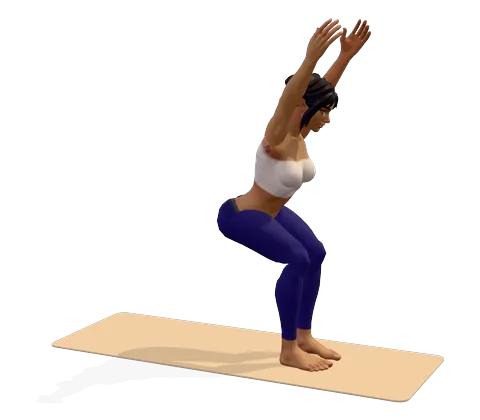
- Interlock your fingers in front of you, turn the palms outward and, breathing in, stretch your arms straight up overhead with the palms facing the ceiling.
- Lengthen your whole body upward, as if someone were gently lifting your hands.
- Breathing out, keep your hips steady and sway your upper body to the left from the waist. Your hips may shift slightly to the right.
- Keep your chest and face turned forward, your arms beside your ears and both feet pressing evenly into the floor. Hold for 2–3 breaths.
- Breathing in, come back to the centre, reaching up tall again.
- Breathing out, sway to the right and hold for the same time. Do 3–5 rounds, then lower the arms and relax.
Where you feel Swaying Palm Tree Pose: what it stretches and strengthens
Sway sideways from the waist like a palm tree in the wind, hips steady. In the 3D guide, turn on Body guide: areas that stretch glow green and areas that work glow saffron.
Stretches
- Side waist
- Shoulders
Strengthens
- Abs
- Ankles
Benefits and precautions
Benefits
- Stretches the side waist (obliques) and the sides of the ribs
- Stretches the shoulders and the underarms
- Gently mobilises the spine sideways, a movement we rarely use
- Works the abdominal muscles that control the bend
- Strengthens the ankles and feet for balance
- Makes breathing into the side ribs easier
Avoid or modify if
- Acute back pain, a slipped disc or scoliosis — bend only a little and ask your physiotherapist
- Shoulder injury or frozen shoulder — keep your hands on your hips or raise one arm only
- Recent abdominal surgery or a hernia — avoid until your doctor says it is safe
- Dizziness or vertigo — keep the bend small and your eyes looking straight ahead
- Pregnancy — a gentle, small bend with feet wider is usually fine; ask your midwife or doctor
Tiryaka Tadasana, the swaying palm tree pose, is a gentle standing side bend: you stretch your arms overhead with the fingers interlocked and sway from side to side, like palm trees swaying in the breeze. It is one of the easiest poses in yoga, suitable for beginners, seniors and children, and is often taught as a warm-up. It stretches the sides of the waist and the shoulders, and it wakes up a stiff spine in a minute or two.
What is swaying palm tree pose?
The Sanskrit name has three parts: tiryaka means "sideways" or "swaying", tada means "palm tree" (or mountain) and asana means "pose". You will also see it spelled Tiryak Tadasana or Tirak Tadasana, and in English it is called the swinging palm tree pose or side-bending palm tree. It belongs to the Tadasana family, together with the upright palm tree pose, where you stretch up on your toes without bending.
Picture a palm tree swaying in the wind: the trunk bends but the roots stay still. In the same way, your feet and hips stay steady and only the upper body sways.
How to do swaying palm tree pose
The steps above follow the 3D guide, which sways to the left first. The pose is done in slow rounds, with the breath: breathe in at the centre, breathe out as you bend. Keep these points in mind:
- Bend sideways, not forward. Imagine you are between two panes of glass. The chest faces the front the whole time.
- Arms by the ears. Keep the elbows straight and the upper arms beside the ears so the arms move with the body.
- Grounded feet. Press both feet down evenly, especially the foot on the side you bend away from.
- Length before depth. Stretch up first, then bend. A small bend with a long waist is better than a deep bend that collapses.
- Relax the face. Keep the jaw soft and breathe through the nose.
If interlocking the fingers is hard on your shoulders, hold opposite elbows or keep the palms together.
Swaying palm tree pose benefits
The main palm tree pose benefits come from the side stretch. The obliques and the muscles between the ribs lengthen, the shoulders and underarms open, and the spine moves sideways, a direction it rarely moves in daily life. The abdominal muscles work to control the bend and lift you back up, and the ankles and feet keep you steady.
Many people also notice that breathing is easier after a few rounds, because the side ribs have more room to expand. It is a quick break for anyone who sits for hours; try it between tasks, alongside the stretches in our yoga for office workers plan.
Muscles stretched and worked
| Stretched | Worked |
|---|---|
| Obliques and the side ribs | Abdominal muscles, controlling the bend |
| Shoulders and underarms (latissimus dorsi) | Ankles and feet, for balance |
Tadasana benefits in this pose
What is Tadasana yoga? Tadasana is the palm tree or mountain pose, the basic standing pose that all others start from. Here is some Tadasana information in English that also applies to the swaying version:
- Tadasana benefits for posture and the spine: standing tall and lengthening upward teaches a neutral spine.
- Tadasana benefits for balance and core strength: the feet, ankles and deep abdominal muscles keep you steady.
- Tadasana benefits for breathing: lifting the arms opens the chest and ribs.
- Tadasana benefits for concentration and anxiety: slow, breath-led movement can help you feel calmer and more focused. It is not a treatment for an anxiety disorder, but it can be a helpful pause.
If you want to learn how to perform Tadasana first, read our Mountain pose guide. Tadasana exercises for beginners, such as the swaying and upright palm tree, also work well as Tadasana exercises for relaxation at the end of a busy day. Students who need images of Tadasana yoga or a stick diagram of Tadasana for school can pause and rotate the 3D figure to see the pose from the front and the side.
Is it one of the asanas for back pain?
Gentle side bends can ease stiffness in the back and are often included in lists of yoga asanas for back pain. Tadasana itself is listed among the asanas for back pain in the class 12 physical education course followed by many Indian schools. For general stiffness, a few slow rounds are usually safe, and these gentle Tadasana exercises for back pain can bring some relief. For a slipped disc, scoliosis or sharp pain, bend only slightly and follow our yoga for back pain plan or your physiotherapist’s advice. The best asanas for back pain relief are the ones that feel better, not worse, the next day.
Similarly, the Trikonasana benefits for back pain come from a longer side stretch in a wide stance; swaying palm tree is an easier first step.
Palm tree pose vs tree pose
The names sound alike, but they are different poses. Palm tree pose (Tadasana family) is done on two feet. Tree pose in yoga, whose Sanskrit name is Vrikshasana, is a one-leg balance with the sole of one foot on the inner leg. To learn how to do tree pose, place your foot on the calf or inner thigh (never on the knee), join the palms and gaze at a fixed point. That steady gaze is a simple cousin of candle gazing; the benefits of Trataka kriya for focus are explained on our Trataka page. The Tree pose page also has its own 3D figure, which is clearer than any yoga tree pose image. The standing tree pose benefits are mostly for balance, focus and ankle strength. For support for the tree pose in yoga, stand near a wall or keep the toes on the floor. Among yoga poses, tree pose is the classic first balance, and the benefits of tree pose yoga practice build well on the steady stance you learn here. Tree pose variations in yoga classes include the double tree pose, done side by side with a partner.
Similar standing side bends
Ardha Kati Chakrasana (lateral arc pose) bends to one side with one arm up and the other along the leg. Kati Chakrasana twists the waist instead of bending it. Together they make a short spine warm-up you can follow in our voice-guided yoga sessions. Children love the swaying palm tree pose for kids games; see yoga for kids.
Frequently asked questions
What is swaying palm tree pose?
Tiryaka Tadasana is a standing side bend: you stretch your arms overhead with the fingers interlocked and sway your upper body to the left and right while your hips stay steady.
What are the benefits of Tiryaka Tadasana?
It stretches the side waist and shoulders, gently mobilises the spine, works the abdominal muscles and ankles, and makes side-rib breathing easier.
How many rounds of swaying palm tree pose should I do?
Do 3–5 rounds to each side, holding each bend for 2–3 breaths.
Is swaying palm tree pose good for beginners?
Yes. It is one of the easiest standing poses. Keep the bend small at first and let it grow.
Who should not do Tiryaka Tadasana?
Take care with acute back pain, a slipped disc, a shoulder injury, recent abdominal surgery or a hernia. Bend only a little or ask your doctor or physiotherapist.
Can Tiryaka Tadasana increase height?
No yoga pose can make adult bones longer. Stretching poses can improve posture, which may help you stand taller.
This page is for general education. Check with your doctor before starting yoga if you are pregnant, have a medical condition or an injury. Stop if you feel pain, dizziness or shortness of breath.