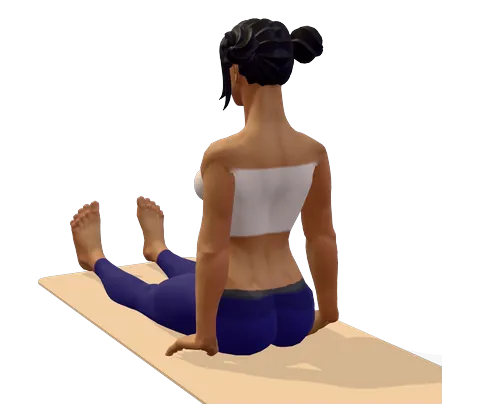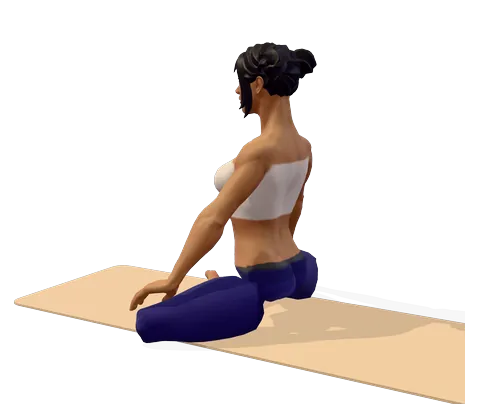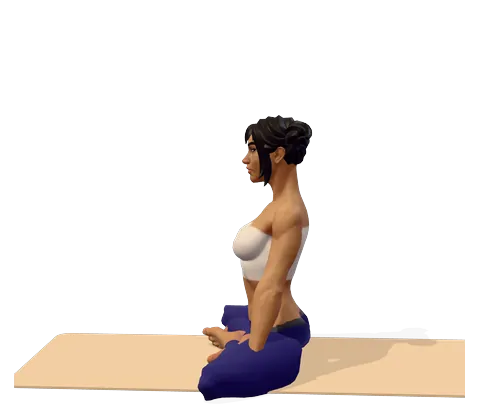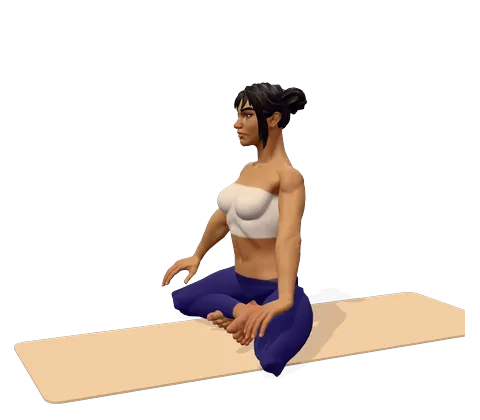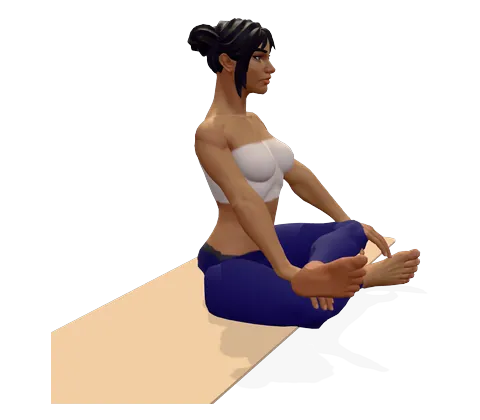
How to do Fire Log Pose step by step
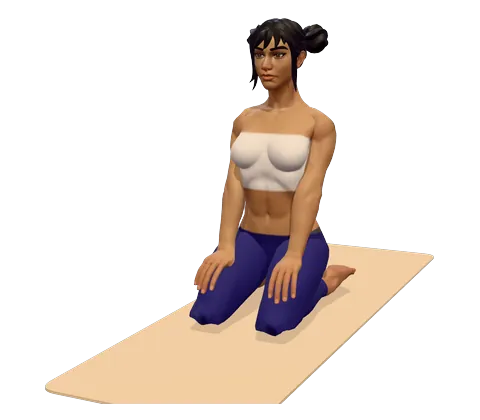
- Sit on the floor, or on a folded blanket so your hips are higher than your knees. Bend both knees.
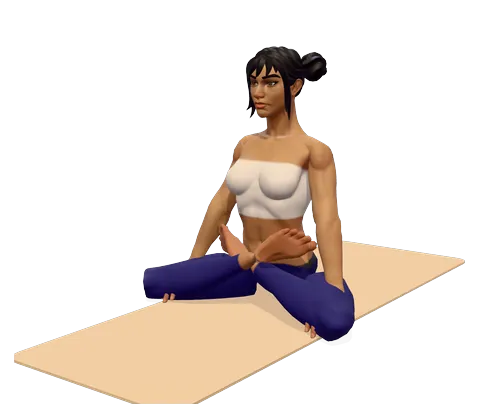
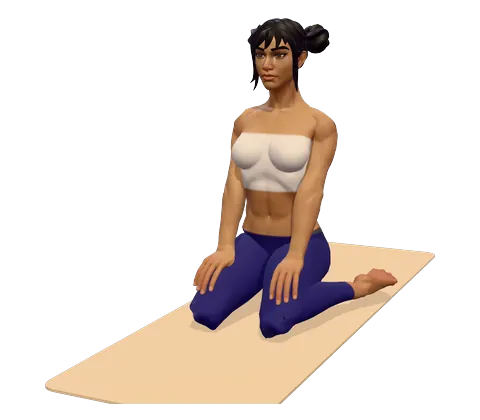
- Place your right shin on the floor parallel to the front edge of the mat, right foot under the left knee.
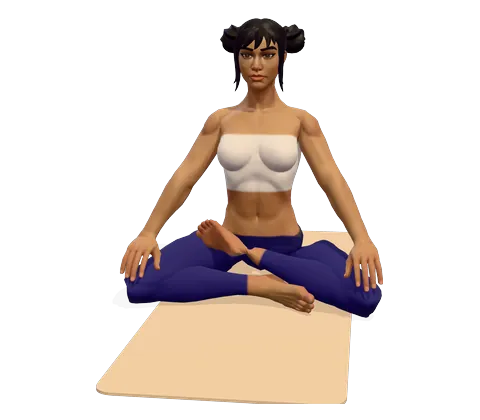
- Stack your left shin on top of the right one, left ankle just outside the right knee and left knee above the right ankle. Your shins make a square with your thighs.
- Flex both feet, pulling the toes back toward the shins, so the ankles stay straight and the knees are protected.
- Rest your hands on your knees or the floor, sit tall and breathe slowly. If you want more stretch, breathe out and walk your hands forward to fold a little from the hips.
- Hold for 30–60 seconds (6–10 breaths), or longer in a yin practice if your knees feel fine.
- Walk your hands back, uncross the legs and stretch them out. Repeat with the right shin on top.
Where you feel Fire Log Pose: what it stretches and strengthens
Stack your shins like logs and flex both feet to protect your knees. In the 3D guide, turn on Body guide: areas that stretch glow green and areas that work glow saffron.
Stretches
- Glutes
- Inner thighs
- Hip flexors
Benefits and precautions
Benefits
- Stretches the outer hips and glutes, including the piriformis
- Opens the inner thighs and the groin
- Can ease the stiffness of long hours sitting in chairs
- Prepares the hips for Lotus and other cross-legged seated poses
- Gives a quiet, steady seat for slow breathing
Avoid or modify if
- Knee injury or knee pain — skip the stack; sit cross-legged or do a reclining figure-four stretch instead
- Ankle injury — avoid putting weight on the top ankle
- Hip replacement — ask your surgeon or physiotherapist whether deep outward rotation is allowed
- Sciatica — go gently; stop if you feel tingling or pain down the leg
- Pregnancy — sit on a higher prop and do not fold forward over the belly
Fire log pose (Agnistambhasana) is a seated hip stretch in which you stack one shin directly on top of the other, like logs placed on a fire. It is also known as double pigeon, square pose and ankle to knee pose. It gives a deep stretch to the outer hips with no weight on the arms, which makes it a favourite at the end of a practice or in yin classes. This page explains how to do fire log pose safely, the benefits, the muscles stretched, modifications and how to protect your knees.
Fire log pose Sanskrit meaning
The fire log pose Sanskrit name is Agnistambhasana: agni means fire, stambha means a pillar, post or log, and asana means pose. So what is a fire log in yoga? It is your two shins, stacked one above the other like firewood. Do not confuse it with the fire hydrant yoga pose, a hip lift done on hands and knees. If you wondered what is a log pose, this is the one most yoga teachers mean.
How to do fire log pose: cues that protect the knees
The steps above follow the 3D guide, which places the left shin on top first. Most problems in the fire log posture come from the knees, not the hips. These fire log pose cues help:
- Stack, do not cross. The top ankle sits outside the bottom knee, and the top knee sits over the bottom ankle. If your ankle is in the middle of the lower shin, you are in a crossed-leg seat, not fire log.
- Flex your feet. Pull the toes toward the shins. A floppy ankle twists the knee joint.
- Sit high. A folded blanket or block under your hips tilts the pelvis forward so the hips, not the knees, do the stretching.
- Fill the gap. If the top knee floats high in the air, slide a block or cushion under it. Do not press it down.
- Stretch in the hip, not the knee. You should feel the stretch in the outer hip and buttock. Pain in or around the knee means stop and modify.
Fire log pose benefits
The main fire log pose benefits come from outward rotation of the hips. The glutes and the small deep hip rotators, including the piriformis, lengthen, and the inner thighs and groin open. For people who sit in chairs all day, these muscles often feel tight, and a regular double pigeon stretch can make sitting cross-legged and squatting feel easier. The fire log pose yoga benefits also include a steady, grounded seat for slow breathing at the end of a session.
Because the stretch is strong, it is best to hold the fire log pose after a warm-up, not first thing in the morning. You can find it in our yoga for tight hips plan.
Fire log pose muscles stretched
| Area | What happens |
|---|---|
| Glutes and piriformis | Main stretch, felt deep in the buttock of the top leg (and often both) |
| Inner thighs (adductors) and groin | Gentle opening as the knees move apart |
| Hip flexors | Mild lengthening when you sit tall on a blanket |
With the Body guide button on, the 3D figure shows the glutes, inner thighs and hip flexors glowing green. This is a passive stretch: no main muscle group has to work hard.
Fire log pose for beginners and modifications
Many people cannot stack the shins on day one, and that is normal. These fire log pose modifications give the same stretch with less strain:
- Sit on a blanket or block so the hips are higher than the knees.
- Top foot on the floor: rest the top foot on the floor in front of the lower shin instead of on top of it.
- Block under the top knee if it hovers high.
- Reclining figure-four: lie on your back, cross the right ankle over the left knee and draw the legs in. This is the gentlest version and the best one with sensitive knees.
- Sit cross-legged in Easy Pose for a minute first, then move to fire log.
Fire log pose progression and variations
A simple fire log pose progression: reclining figure-four, then fire log with the top foot on the floor, then the full stack sitting on a blanket, then the full stack with a forward fold. Other firelog pose variations include a side bend over each thigh and a gentle twist, with one hand behind you. Only fold forward once your knees are completely comfortable.
Square pose in yin yoga
In yin yoga the same shape is called square pose, because the shins and thighs form a square. Fire log pose in yin yoga is held for three to five minutes, usually with a gentle forward fold and props under the knees. Long holds place more load on connective tissue, so square pose yin practice should always feel like a stretch, never pain. Read more in our yin yoga guide.
Fire log pose vs half lotus, pigeon and frog
- Fire log pose vs half lotus: in half lotus the top foot rests on the opposite thigh, near the hip, which needs more outward rotation. Fire log is a common step toward it.
- Double pigeon vs single pigeon: pigeon pose stretches one hip with the back leg long behind you. Pigeon pose for beginners is often done with a block under the hip. Pigeon pose for lower back pain can help when tight hips pull on the back; the double pigeon yoga shape does the same while seated.
- Fire log vs frog: the frog yoga pose (the wide-knee kind) stretches the inner thighs instead. The benefits of frog pose are mostly for the groin, and frog pose for back pain needs care because it can arch the lower back.
Tight hips often come with back discomfort. If that is your reason for doing this pose, see yoga for back pain and yoga for sciatica, and ask a physiotherapist if pain travels down your leg.
Frequently asked questions
What is fire log pose good for?
It stretches the outer hips, glutes and piriformis and opens the inner thighs. Many people use it to ease stiffness from sitting and to prepare for cross-legged and lotus poses.
Is fire log pose the same as double pigeon?
Yes. Fire log pose, double pigeon, square pose and ankle to knee pose are different names for Agnistambhasana.
Why does fire log pose hurt my knees?
Usually the hips are not yet open enough, so the knee twists instead. Sit on a blanket, flex your feet, put a block under the top knee, or use the reclining figure-four version.
How long should I hold fire log pose?
Hold for 30–60 seconds on each side in an active practice, or three to five minutes in yin yoga if your knees feel fine.
Why should I flex my feet?
Flexed feet keep the ankles straight and stop the knee joint from twisting, which protects the ligaments.
Can beginners do fire log pose?
Yes, with props. Start with the reclining figure-four stretch or fire log with the top foot on the floor, and sit on a folded blanket.
This page is for general education. Check with your doctor before starting yoga if you are pregnant, have a medical condition or an injury. Stop if you feel pain, dizziness or shortness of breath.