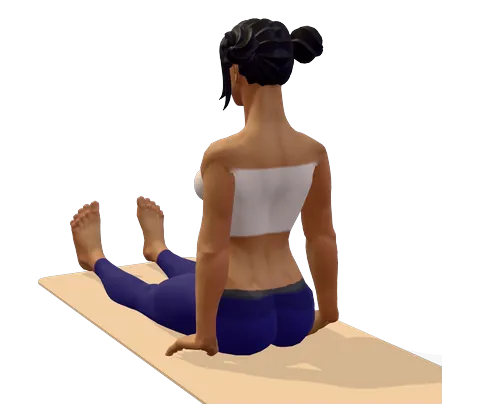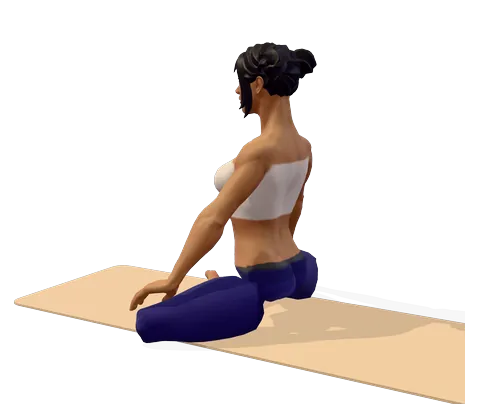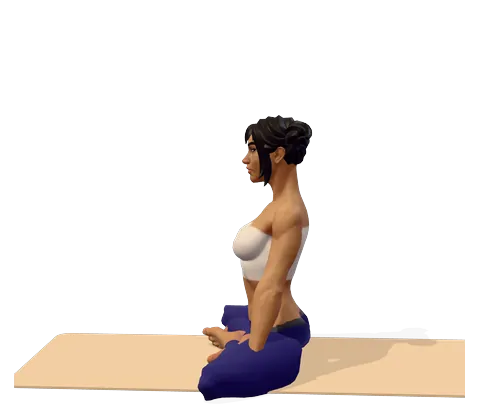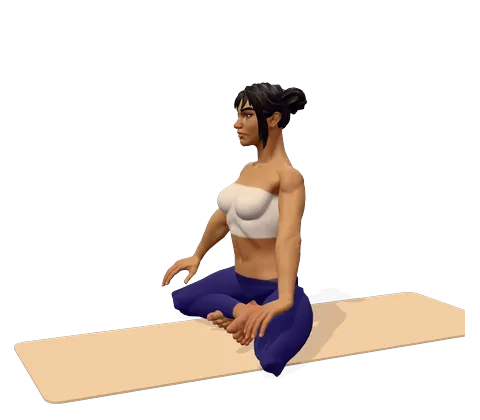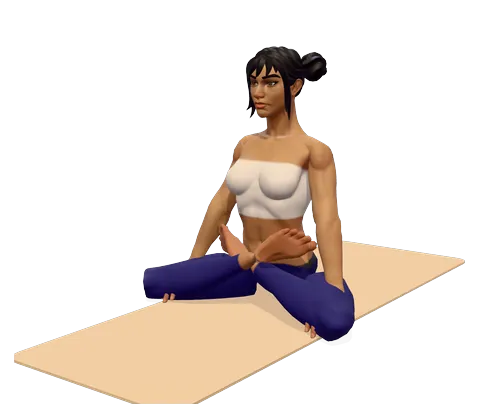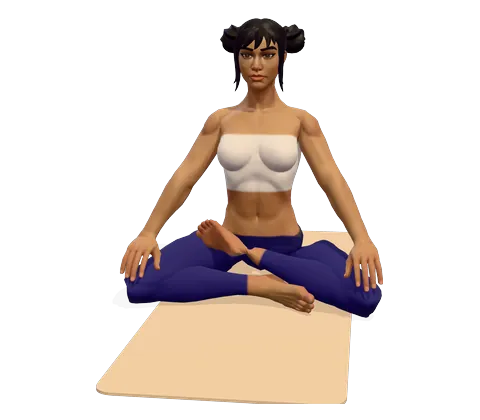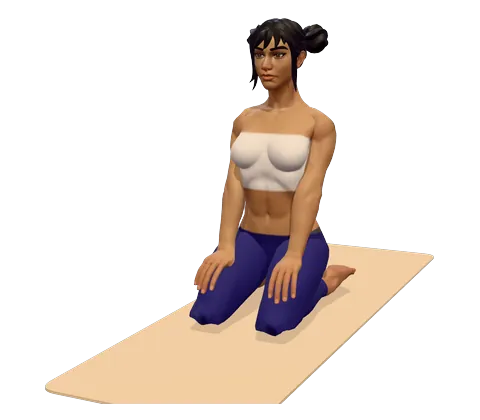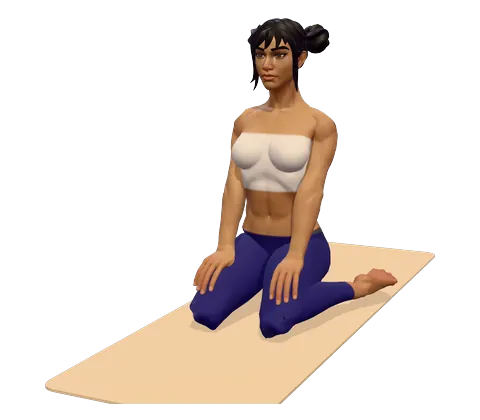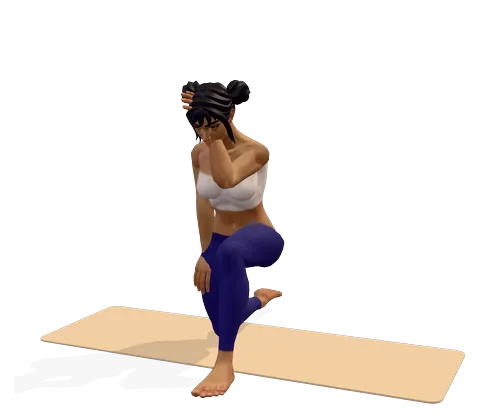
How to do Kneeling Hero Pose step by step
- Kneel on a folded blanket with your knees hip-width apart and your body upright. Rest your hands on your thighs and take a few calm breaths.
- Step your left foot forward and place it flat on the mat, so your left knee is bent at about a right angle above the ankle. Your right knee and the top of your right foot stay on the floor.
- Keep your right hip directly above your right knee. Gently draw your tailbone down so you feel a mild stretch at the front of the right hip.
- Lean your chest a little forward and rest your left elbow on your left knee. Place your chin in your left palm.
- Rest your right hand on your right thigh. Relax your face and shoulders, and look softly ahead or close your eyes.
- Stay for 20–30 seconds (4–6 slow breaths), breathing through the nose. For a quieter version, lower your hips and sit on your right heel.
- To come out, lift your chin, place both hands on the floor, step the left foot back and kneel. Repeat with the right foot forward.
Where you feel Kneeling Hero Pose: what it stretches and strengthens
Rest your chin on your palm and sit quietly on your back heel. In the 3D guide, turn on Body guide: areas that stretch glow green and areas that work glow saffron.
Stretches
- Hip flexors
- Ankles
Strengthens
- Front thighs
- Glutes
Benefits and precautions
Benefits
- Stretches the front of the back hip (hip flexors) and the top of the ankle
- Gently works the thigh and buttock muscles of both legs
- Trains steady, upright kneeling — useful for getting up from the floor
- Encourages a calm, inward focus; traditionally used before meditation
- A gentle counter-pose for long hours of sitting in a chair
- Needs no equipment and suits most beginners
Avoid or modify if
- Knee pain or a recent knee injury — pad the kneeling knee well or practise the chair version instead
- Knee replacement — kneeling may be uncomfortable or restricted; ask your surgeon or physiotherapist first
- Ankle injury or stiff ankles — place a rolled towel under the back ankle, or tuck the toes under
- Poor balance or dizziness — kneel next to a wall or a chair you can hold
- Stop if you feel sharp pain in the knee, hip or lower back
Veerasana (kneeling hero pose) is a calm kneeling posture: you kneel on one knee, place the other foot in front, and rest your chin in your palm. Because of that shape it is also called the thinker pose. It looks simple, but it teaches balance, steady kneeling and a quiet mind. This guide explains how to do Veerasana, its benefits, the muscles it works, how it differs from Virasana, and how to protect your knees.
What is Veerasana? Meaning of the name
The name comes from Sanskrit: veera (वीर) means "hero" or "brave one" and asana means "pose", so the Veerasana meaning is "hero's pose". You may also see it written as veera asana or veer asana. In the Bihar (Satyananda) tradition it is taught as a heroic kneeling pose for concentration: the hero is resting, but alert and ready to rise.
It is also called the thinker pose, because the shape recalls the famous Thinker statue, chin in hand. Unlike a flat thinker pose picture, the 3D figure can be rotated, so it doubles as a kneeling down pose reference. What does kneeling symbolize? In many cultures, humility and attention — the mood of this pose.
Veerasana vs Virasana: are they the same hero pose in yoga?
This confuses many students. "Veerasana" and "Virasana" are two spellings of the same Sanskrit word, but different schools use them for different poses:
| Veerasana (this page) | Virasana (hero pose) | |
|---|---|---|
| Shape | Kneeling on one knee, other foot forward, chin in palm | Sitting on the floor between both heels |
| Knee load | One knee on the floor, moderate bend | Both knees fully bent — deeper |
| Main use | Focus, balance, gentle hip stretch | Stretching thighs and ankles, seated meditation |
The benefits of Virasana are mainly a deep thigh and ankle stretch; Veerasana is lighter and more about steadiness. Virasana vs Vajrasana: in Vajrasana you sit on your heels, in Virasana you sit between them. Some teachers also call Virasana "saddle pose"; saddle pose vs hero pose usually means the reclined version, supta virasana. Virasana with Gomukhasana arms, a downward facing hero's pose (folding forward) and Ardha Virasana, the half hero yoga pose with one leg straight, all belong to that seated family.
How to do Veerasana correctly (Veerasana kaise kare)
These points make the difference:
- Stack the back leg. Keep the right hip directly above the right knee. If the hip drifts back, you lose the gentle hip flexor stretch.
- Front foot under the front knee. The left shin should be close to vertical, not with the knee pushed far past the toes.
- Lean, do not slump. Tilt the chest forward from the hips so the elbow rests on the knee, but keep the spine long.
- Let the head be heavy. The palm supports the chin so the neck can relax.
Kneeling to tall kneeling, and tall kneeling to half kneeling
Veerasana is a half-kneeling position. Moving from kneeling (sitting on the heels) to tall kneeling (thighs upright), and from tall kneeling to half kneeling (one foot forward), is exactly the sequence physiotherapists use to teach people how to get up from a kneeling position. If you can't get up from a kneeling position easily, practise this: kneel tall, step one foot forward into Veerasana, place both hands on the front thigh and press up to stand. Hold a chair at first.
Veerasana benefits
Veerasana benefits are modest and practical. It stretches the front of the back hip, tight from long sitting, and works the thighs and buttocks that hold you upright. Resting the chin and closing the eyes makes it a short concentration practice before meditation. Among kneeling pose benefits, the most useful is confidence on the floor for daily tasks like gardening.
Is it good for back pain?
Which yoga asana helps relieve back pain? There is no single one. Tight hip flexors can pull on the lower back, so a gentle hip flexor stretch like this may help as part of a wider plan. For better asanas for back pain relief and a full routine, see yoga for back pain. If kneeling is hard, chair yoga poses for back pain in chair yoga are a good alternative.
Muscles worked in the kneeling hero pose
| Stretches | Strengthens |
|---|---|
| Hip flexors of the back leg (iliopsoas, front of the thigh) | Quadriceps (front of both thighs) |
| Front of the back ankle and foot | Gluteal muscles (buttocks) |
Press the Body guide button in the 3D demo to see these areas glow: green for the stretch, saffron for the work.
Is hero pose bad for knees?
Deep Virasana can strain sensitive knees because both knees bend fully. Veerasana is gentler, but the kneeling knee still carries weight: pad it, never kneel on a hard floor, and stop if you feel sharp pain. Among yoga poses on knees and yoga poses sitting on knees, this is one of the easier ones; with arthritis or a knee replacement, ask your physiotherapist first. Yoga poses on hands and knees, like tabletop, spread the load over both knees. Is chair pose good for knees? It strengthens the thighs that support the knee, if you keep it shallow and pain-free. Our yoga for knee pain plan lists yoga poses for knee pain relief that do not need kneeling at all.
Veerasana for beginners and variations
- Extra padding: double the blanket under the kneeling knee.
- Hands on the thigh: skip the chin rest and place both hands on the front thigh to feel steadier.
- Seated version: sit back on the right heel, as in the traditional teaching, for a quieter hold.
- Chair version: sit on the edge of a chair, one foot forward, elbow on knee and chin in hand.
- Deeper stretch: let the hips move forward into low lunge for a stronger hip flexor opening.
Asana starter vs advanced? Veerasana is a starter asana. For asana training for beginners, and how to use each asana for beginners safely, our yoga for beginners guide works as an asana for beginners tutorial. Later, move on to lunges; the benefits of warrior poses (strong legs, stamina) build on this same kneeling stability, as do the benefits of triangle pose. Balance poses like king dancer pose in yoga come much later.
Poses to do before and after Veerasana
Warm up in Vajrasana and a few rounds of cat and cow. A seated head to knee pose in yoga, Janu Sirsasana, is a good follow-up; the standing head to knee pose is far harder. Afterwards, sit and try a simple twist — see how to do Vakrasana on our Vakrasana page. You can add Veerasana to a flow in the sequence builder or practise with the voice guide in the guided sessions.
वीरासन (Veerasana in Hindi) — हिंदी में: वज्रासन में बैठें, फिर बायाँ पैर आगे रखें और दायाँ घुटना ज़मीन पर रहने दें। बायीं कोहनी बाएँ घुटने पर रखें और ठुड्डी हथेली पर टिकाएँ। 20–30 सेकंड धीरे साँस लें, फिर दूसरी तरफ़ करें। वीरासन के फायदे (Veerasana ke fayde): कूल्हे के आगे का हिस्सा खिंचता है, जाँघें मज़बूत होती हैं और मन शांत व एकाग्र होता है। घुटने में दर्द हो तो नीचे मोटा कंबल रखें या कुर्सी पर करें।
Frequently asked questions
What are the benefits of Veerasana?
Veerasana stretches the front of the back hip and ankle, gently works the thighs and buttocks, improves steady kneeling and calms the mind. It is often used as a short focus practice before meditation.
Is Veerasana the same as Virasana?
The names are two spellings of the same word, "hero pose". In this tradition Veerasana is the kneeling thinker pose on one knee. Virasana usually means sitting on the floor between both heels.
Is hero pose bad for knees?
Deep seated hero pose can be hard on sensitive knees. Veerasana is gentler, but always pad the kneeling knee and stop if you feel sharp pain. With a knee injury or replacement, ask your doctor or physiotherapist first.
How long should I hold the kneeling hero pose?
Hold for 20–30 seconds (4–6 slow breaths) on each side. For concentration practice you can stay up to a minute if your knee is comfortable.
Why is it called the thinker pose?
Because you rest your chin in your palm with the elbow on the knee, like the famous statue of a thinking man. The pose is meant to calm and focus the mind.
Can beginners do Veerasana?
Yes. It is a level 1 pose. Use a folded blanket under the knee, keep a wall or chair nearby for balance, and start with short holds.
What are the benefits of yoga (yoga karne ke fayde)?
Regular yoga may improve flexibility, strength, balance, sleep and mood. Veerasana adds a gentle hip stretch and a moment of stillness to your practice.
This page is for general education. Check with your doctor before starting yoga if you are pregnant, have a medical condition or an injury. Stop if you feel pain, dizziness or shortness of breath.